Epi-Connect

Epi-Connect

EpiConnect

Fall 2016 Senior Studio Project 

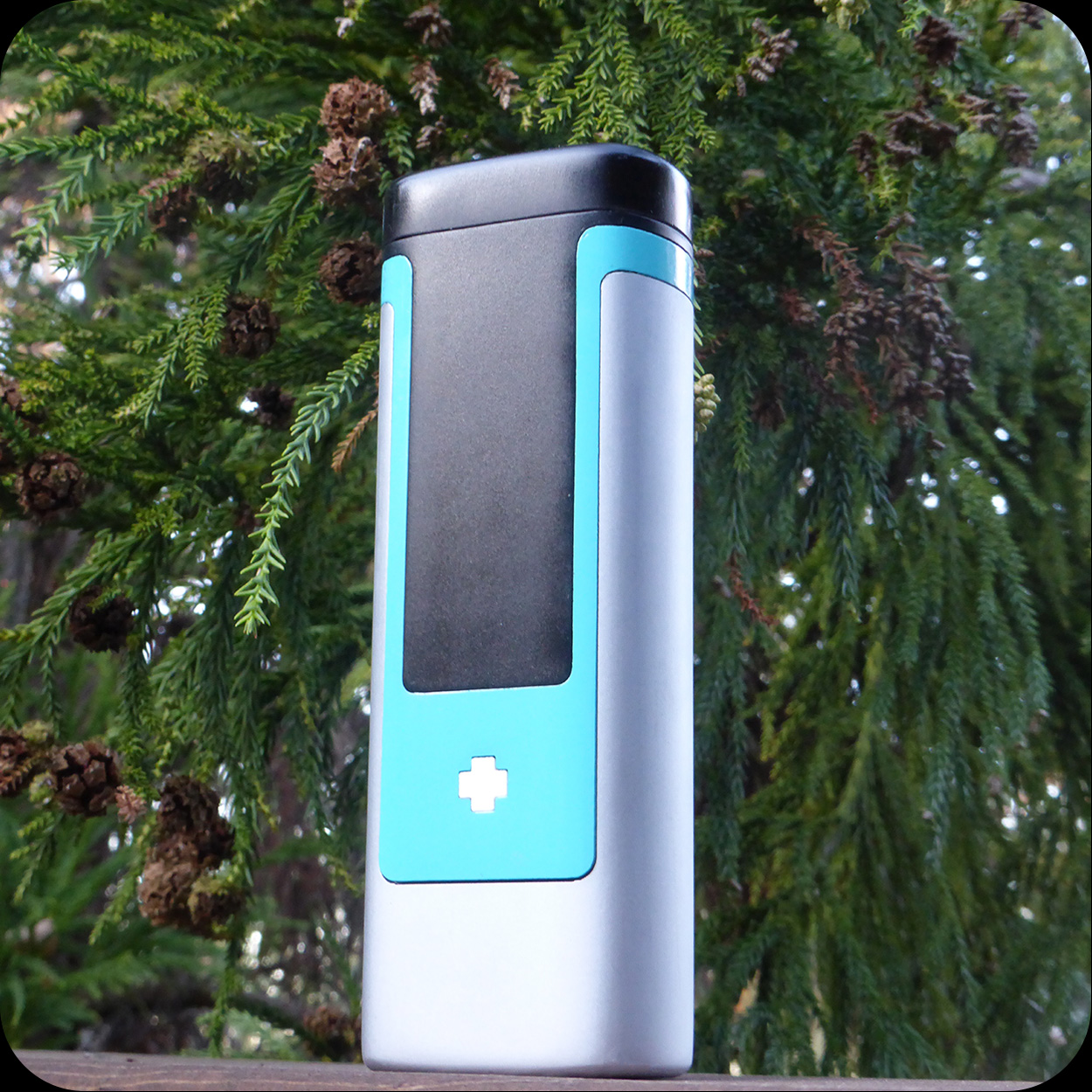
EpiConnect is a smart case and mobile app system that monitors Epipen expiration and builds a network of support throughout the community of people with severe allergies.

Internal Temperature Regulation

GPS Tracking & Separation Reminders

Exposure Monitoring & Expiration Estimation

Local Emergency Support Network

No-Talk 911 Call with Location Notification
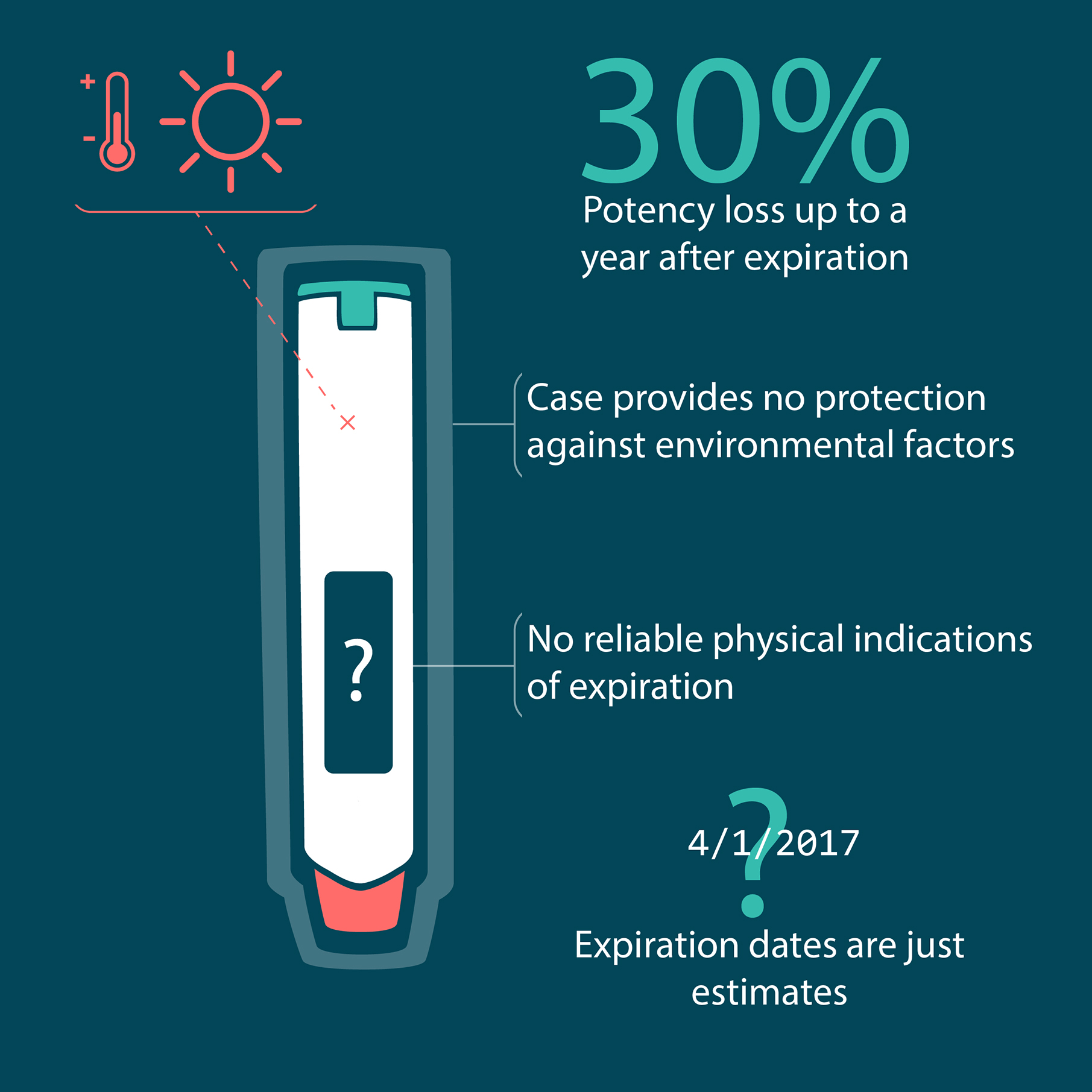
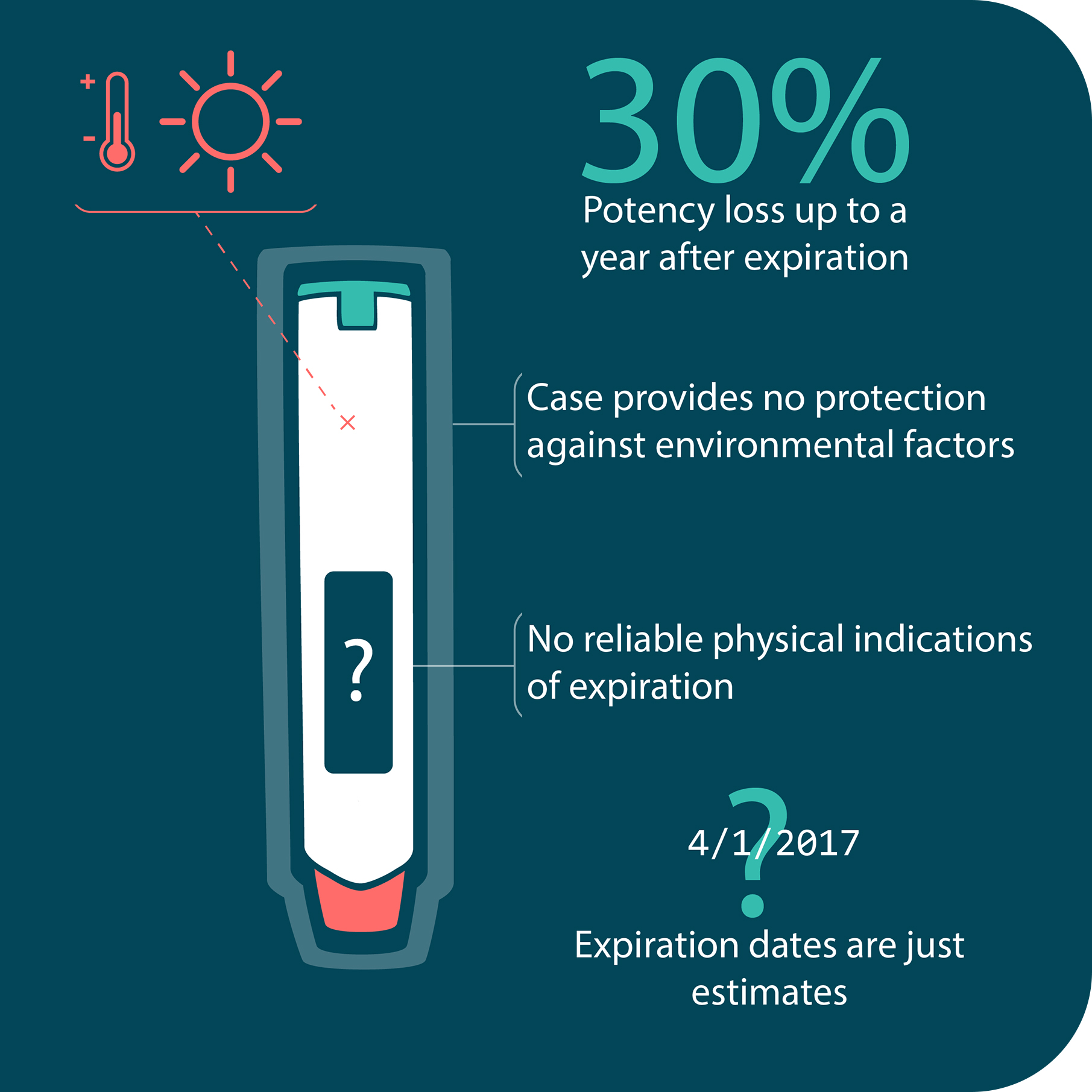
Problem: Expiration

Unpredictable exposure to sun and temperature changes cause epinephrine to expire earlier then the estimated expiration date.

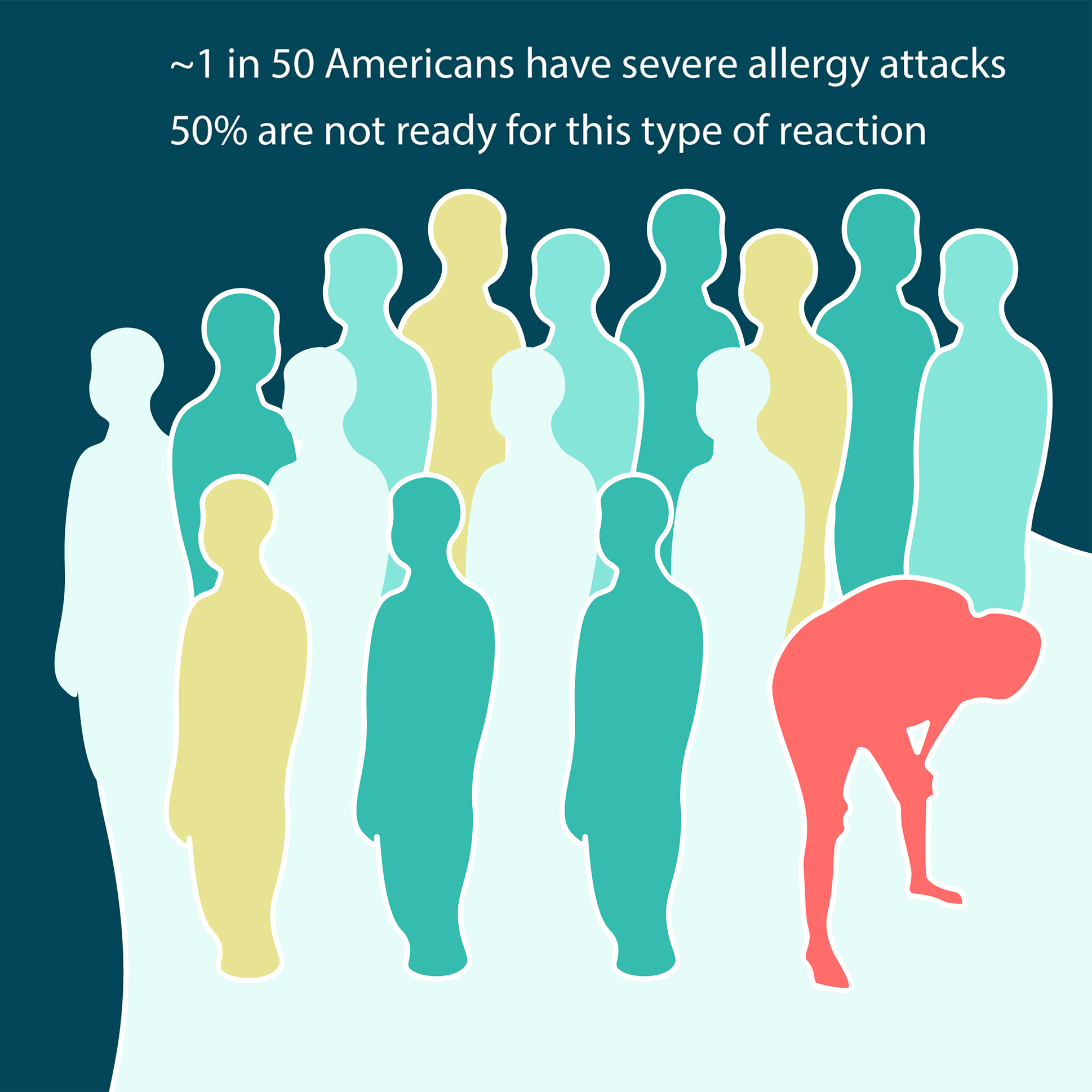
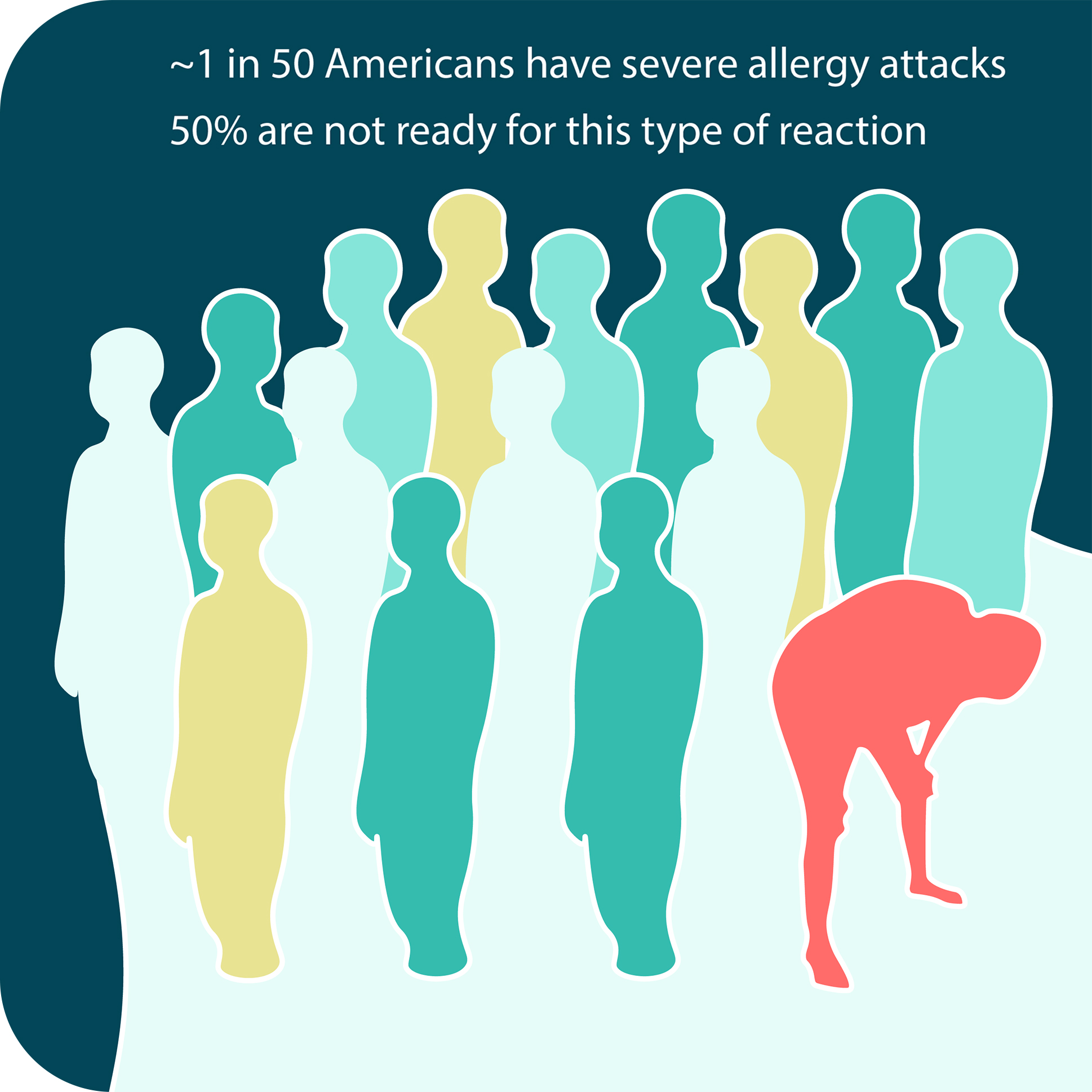
Problem: Disconnection

The Epipen is only as reliable as it’s user. The community of people with severe allergies has a limited support network. Going into anaphylaxsis shock without an Epipen on hand, even in public, can feel very lonely and hopeless.

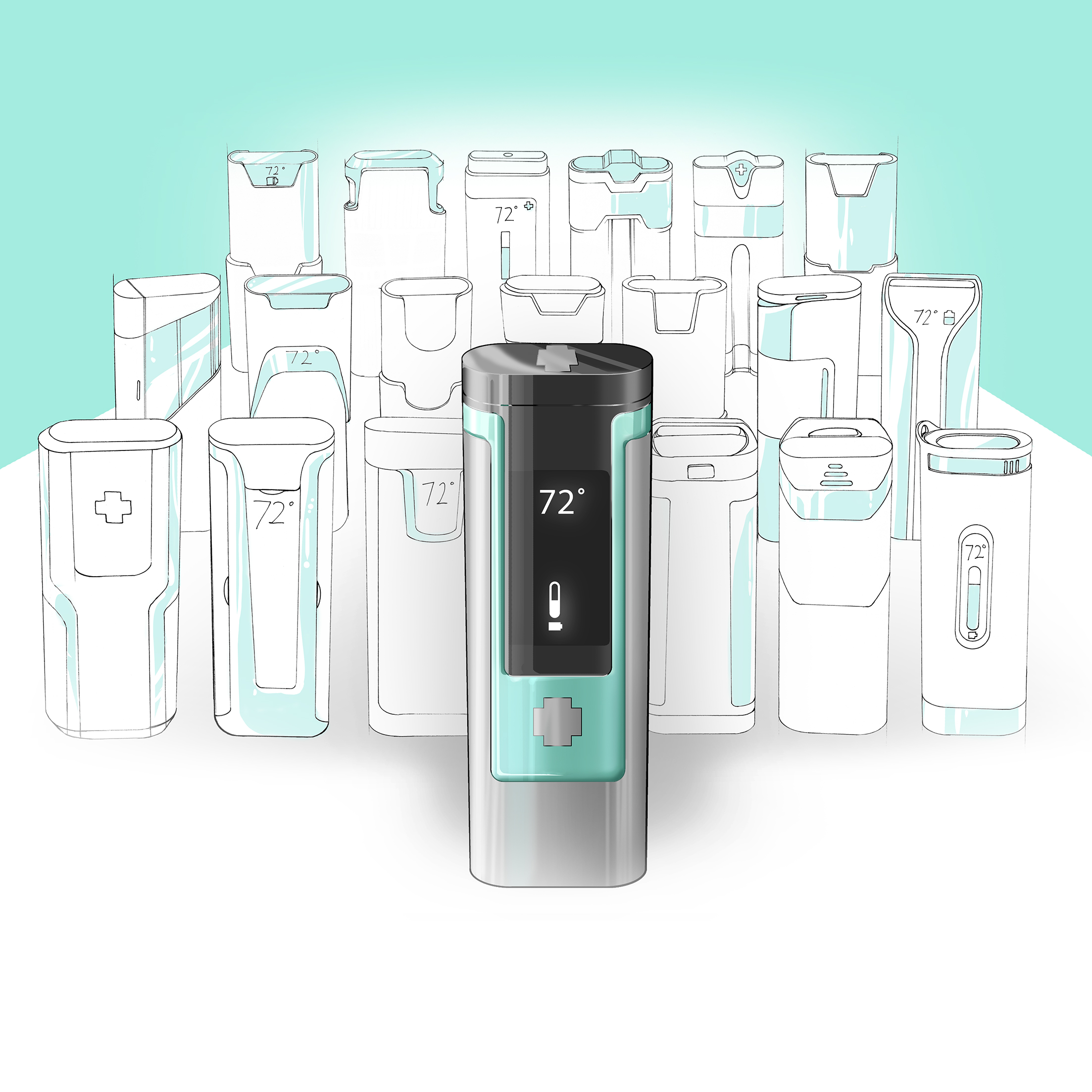
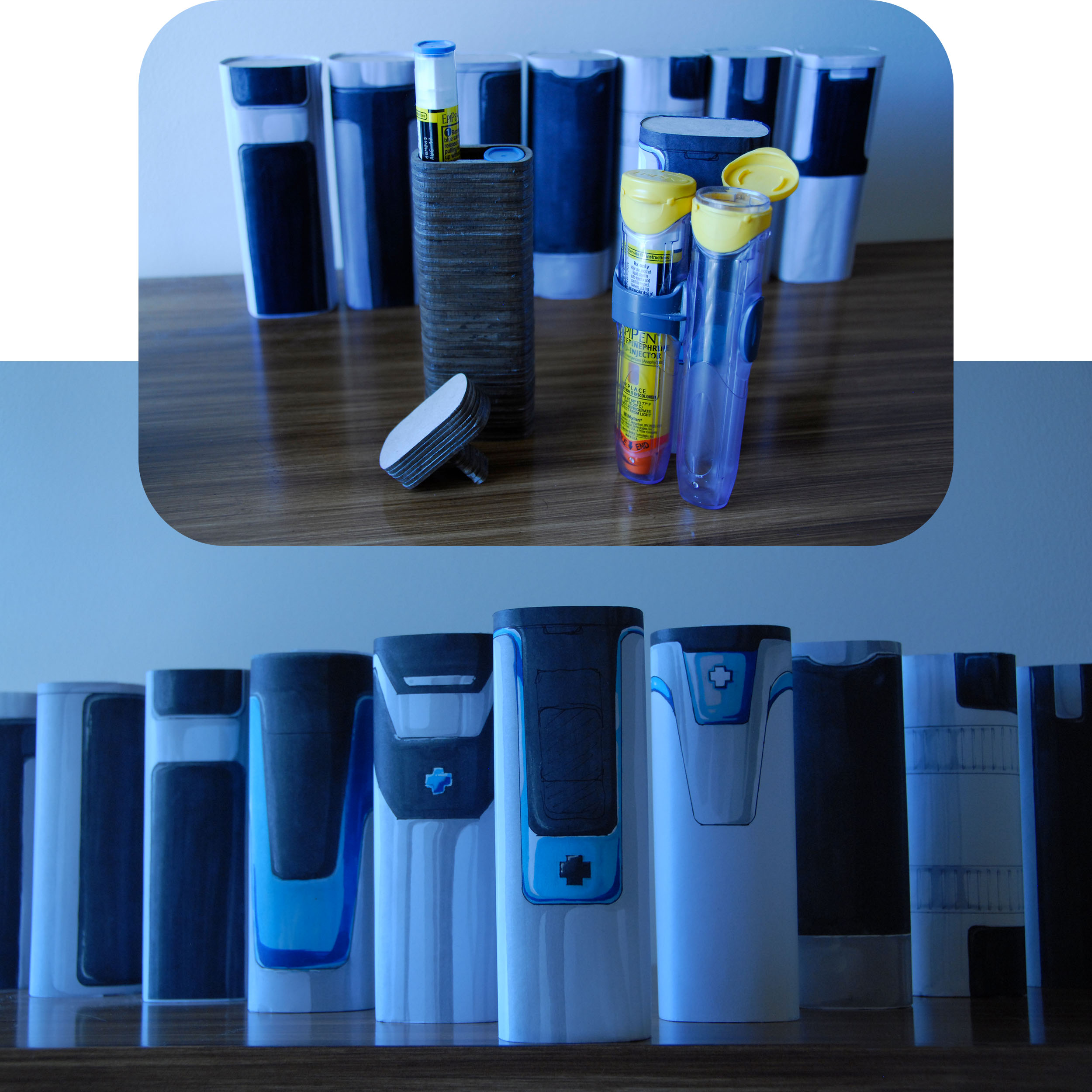
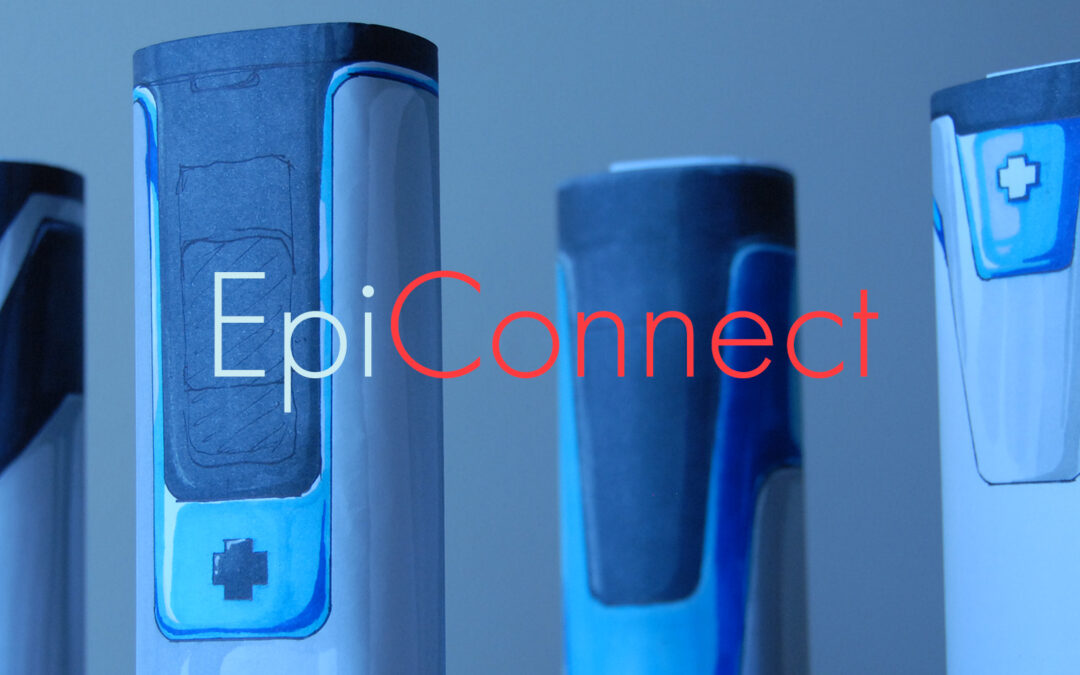
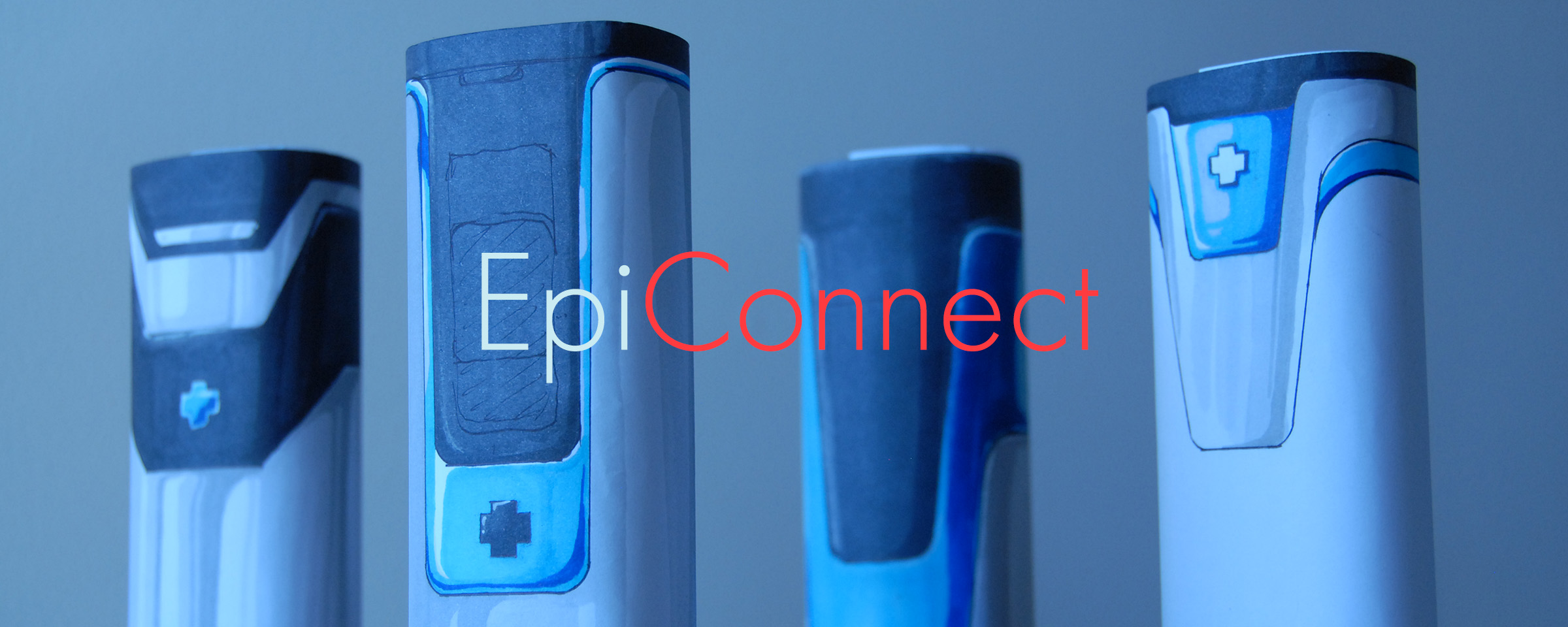
Process: Form Sketches

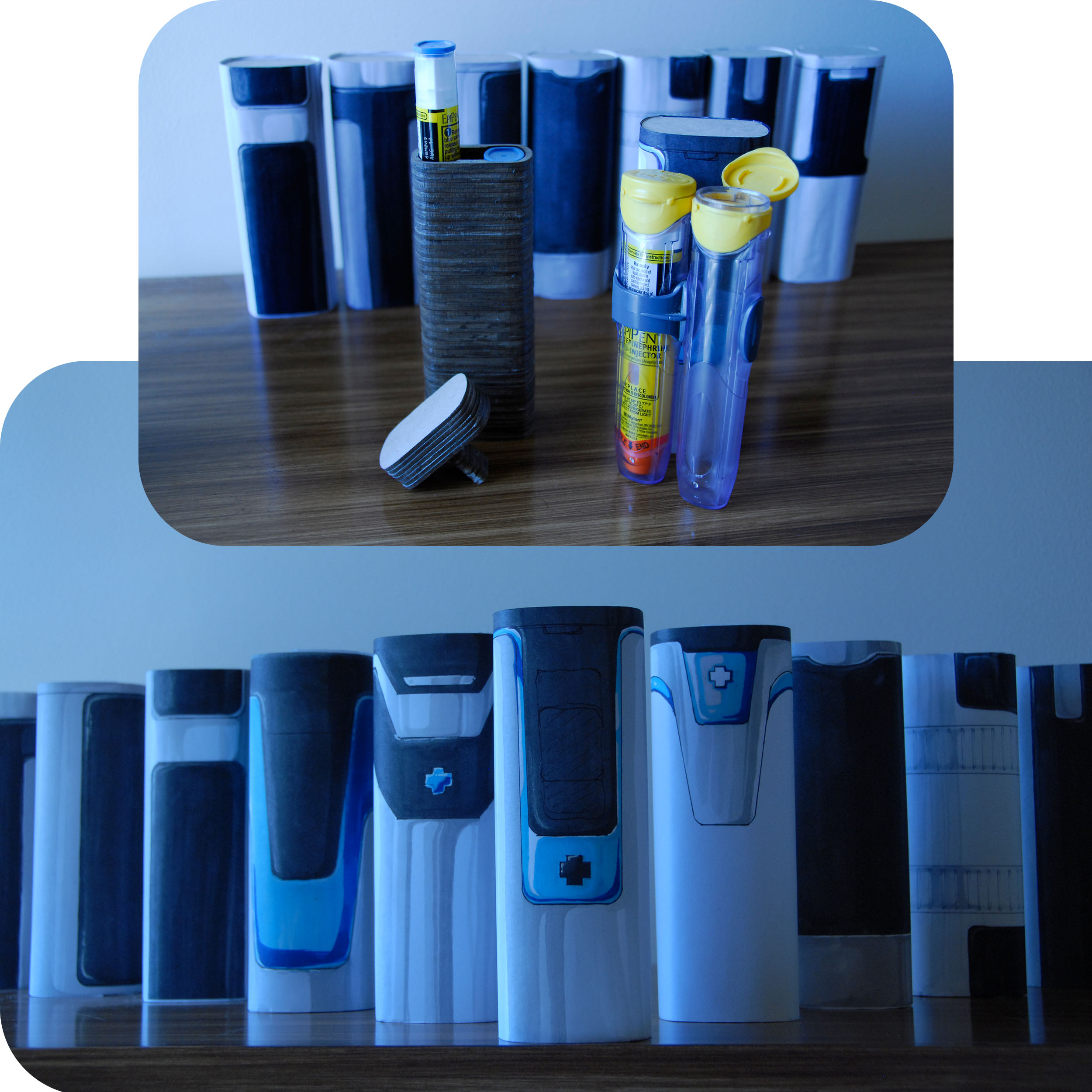
The $400 Epipen comes in a $2 plastic case that provides no environmental protection. The design process began with brainstorming potential functionality and aesthetics that matched the expense and importance of the Epipen.

Process: Paper Mockups

The favored sketches were turned into paper models to test the design in three dimensions. Chipboard mockups were made to test Epipen fit and ergonomic feel.

Solution: How It Works

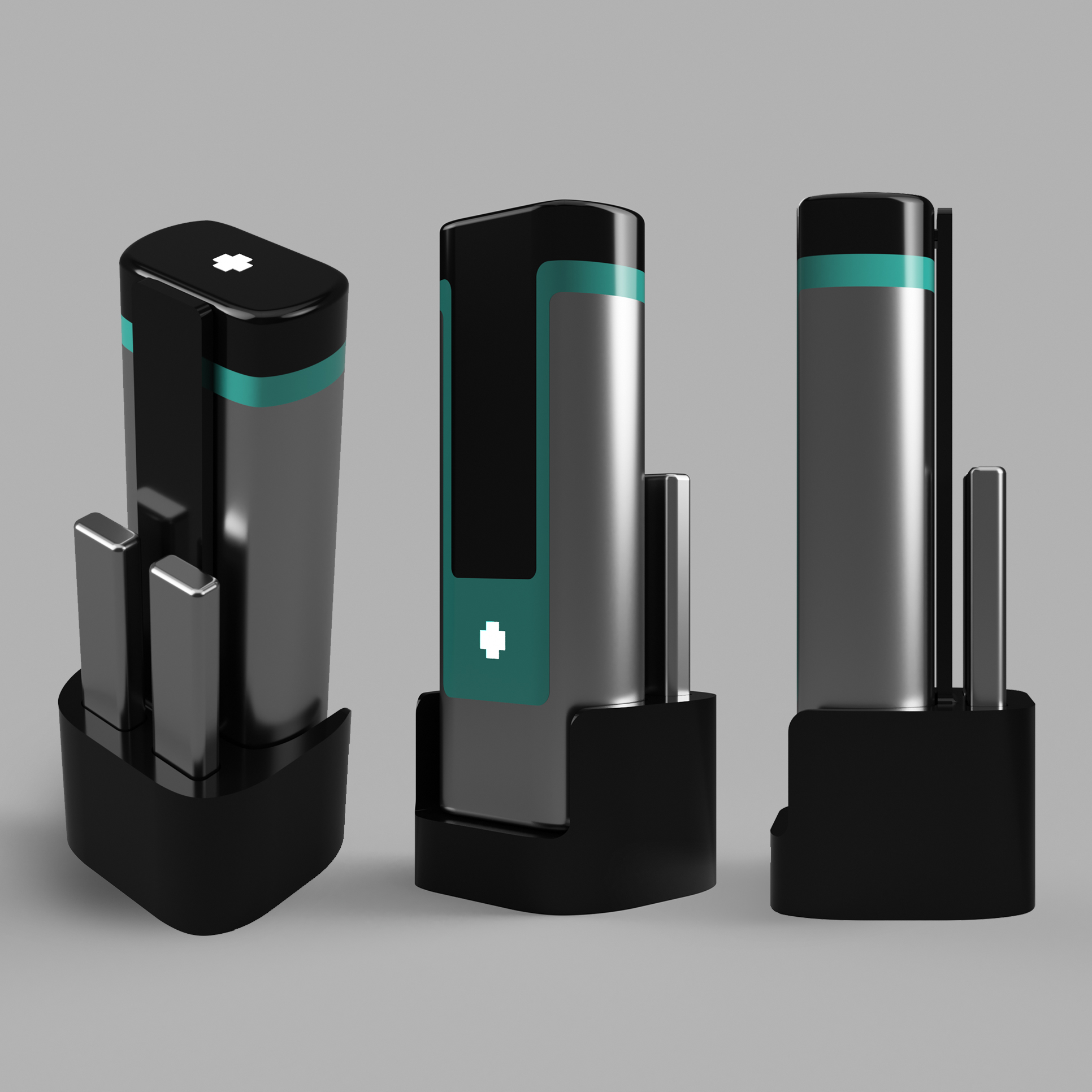
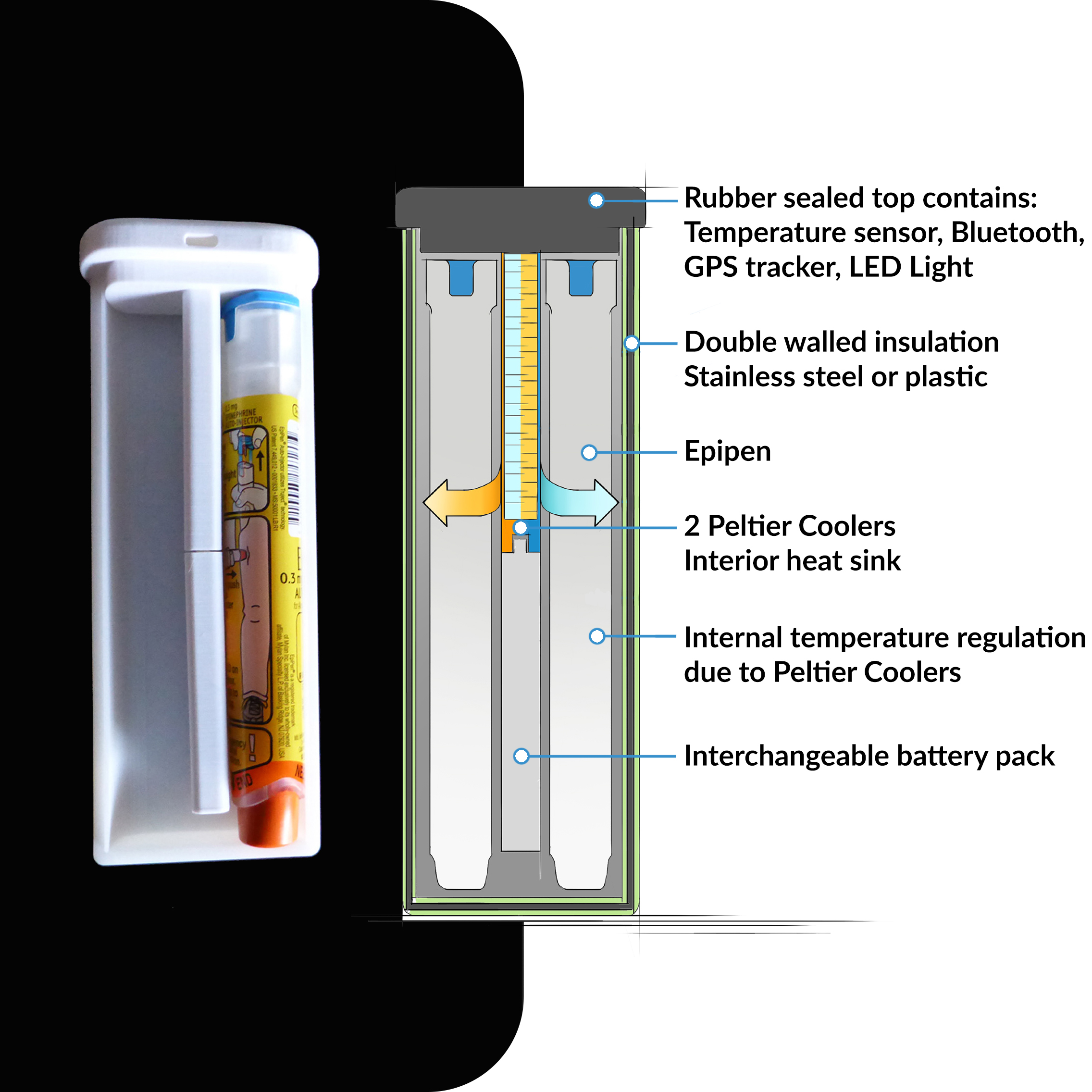
Two Peltier Coolers are used to cool or heat the inside of the Epipen Case, while the double wall insulation helps to preserve the internal temperature of the case.

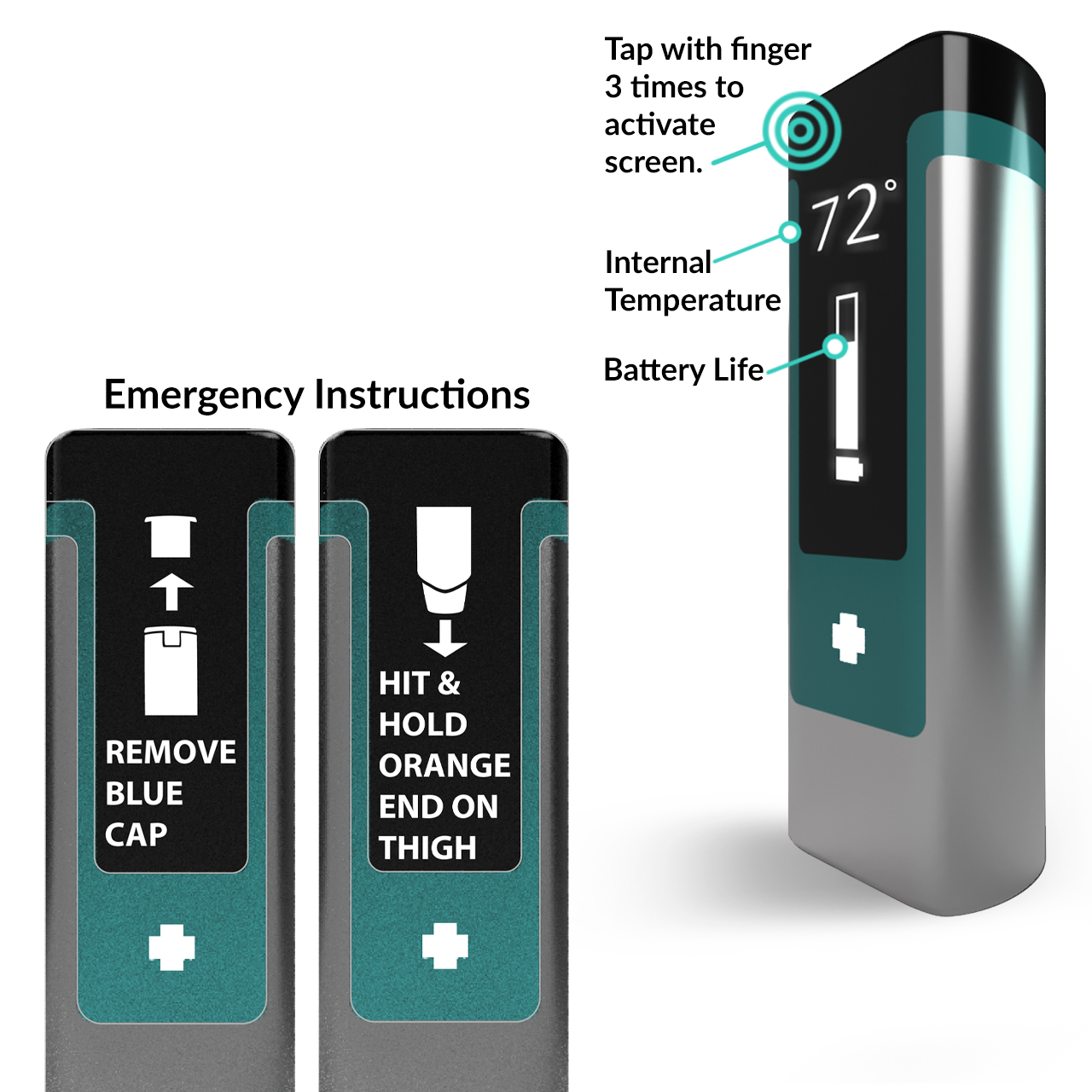
Solution: Digital Screen

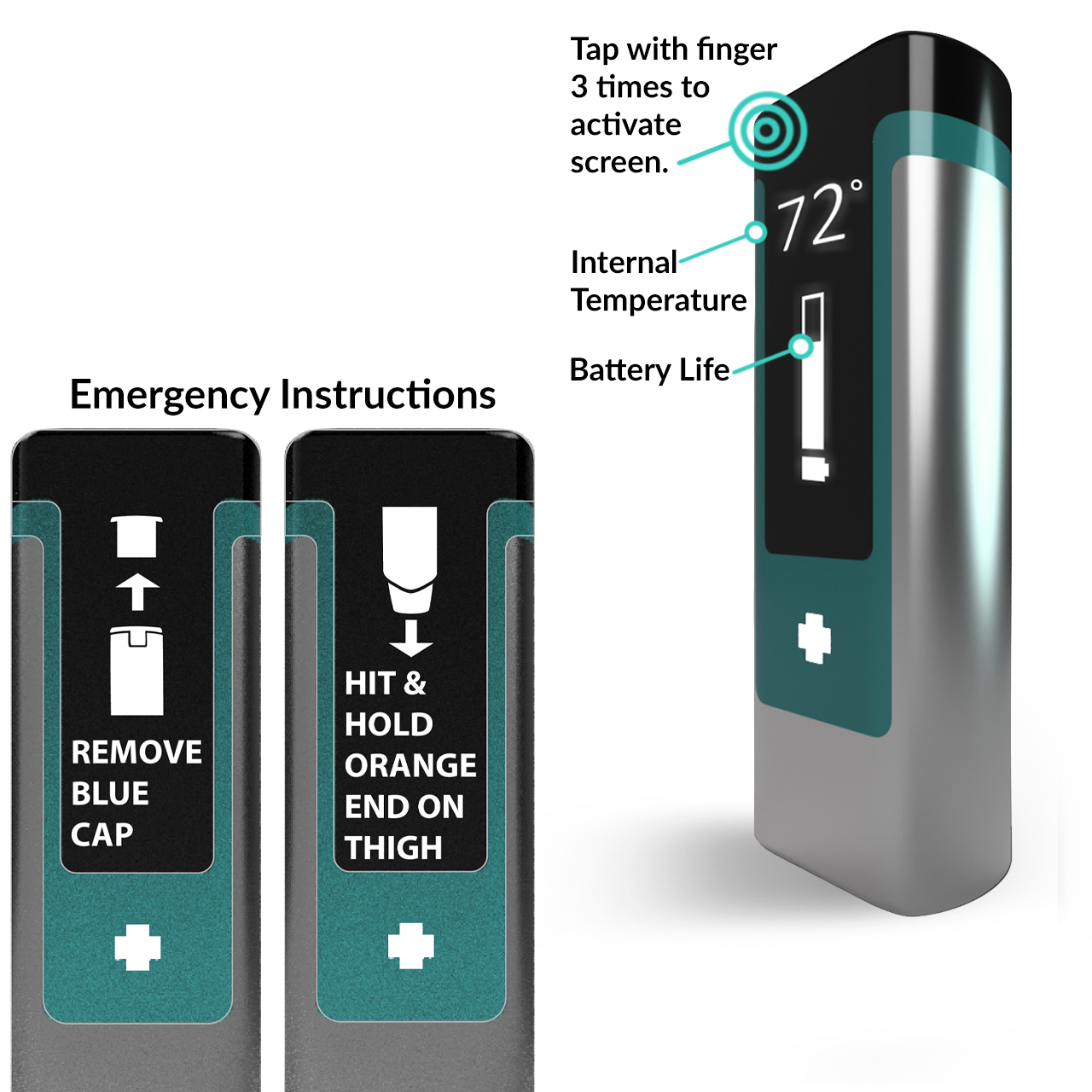
Quick case status updates and emergency instructions can be accessed on the case’s external screen.

Solution: Home Charging Station

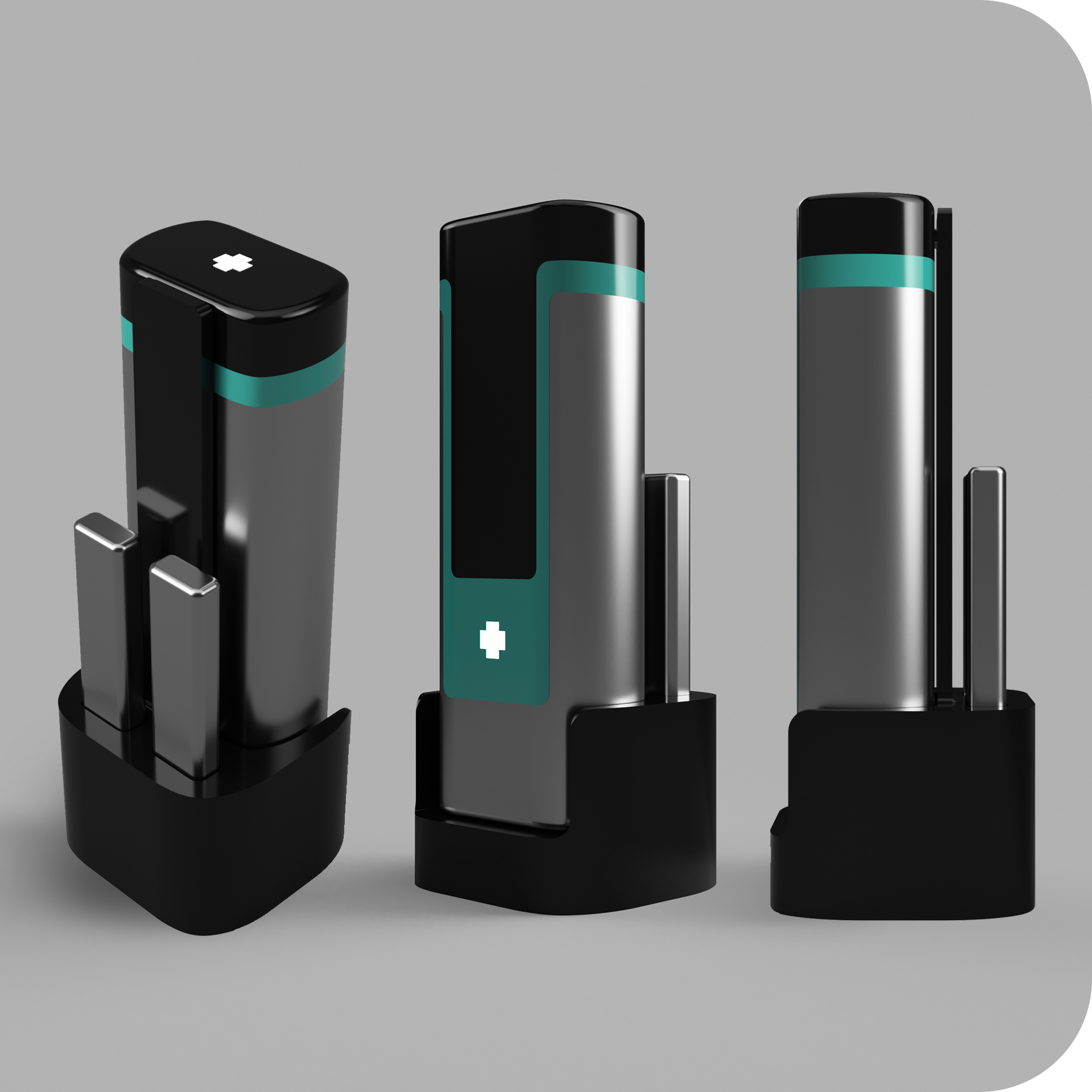
When the user is at home, the Epipen case is stored on a charging stand. The Epipens remain in the case to allow for continuous thermal regulation and monitoring. The charging station charges the case and two backup batteries.

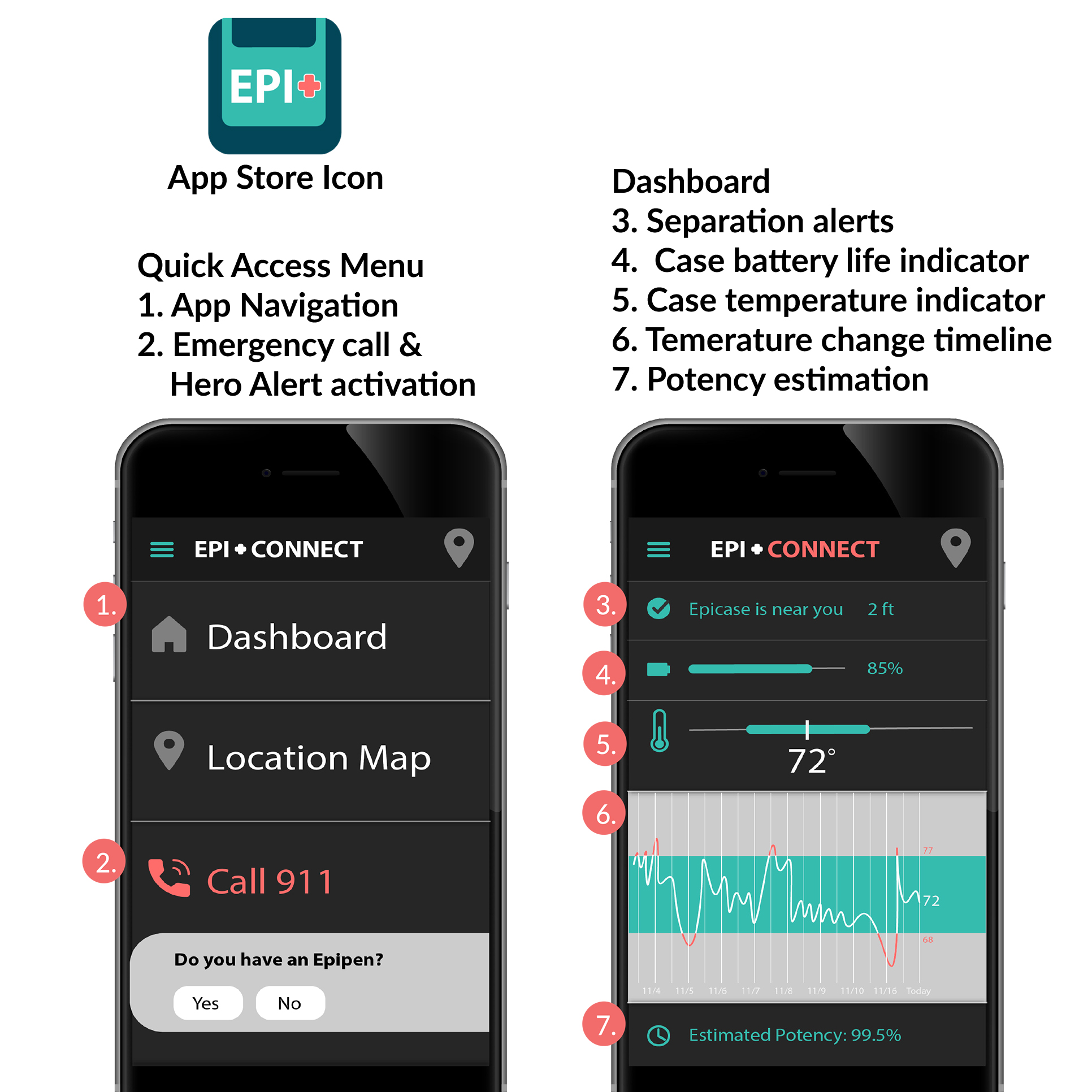
Solution: EpiConnect App

With the help of technology, this app and smart-case system helps track and monitor Epipens to ensure that they are always with the user, kept in optimal conditions, and are replaced when the expiration date is reached. 

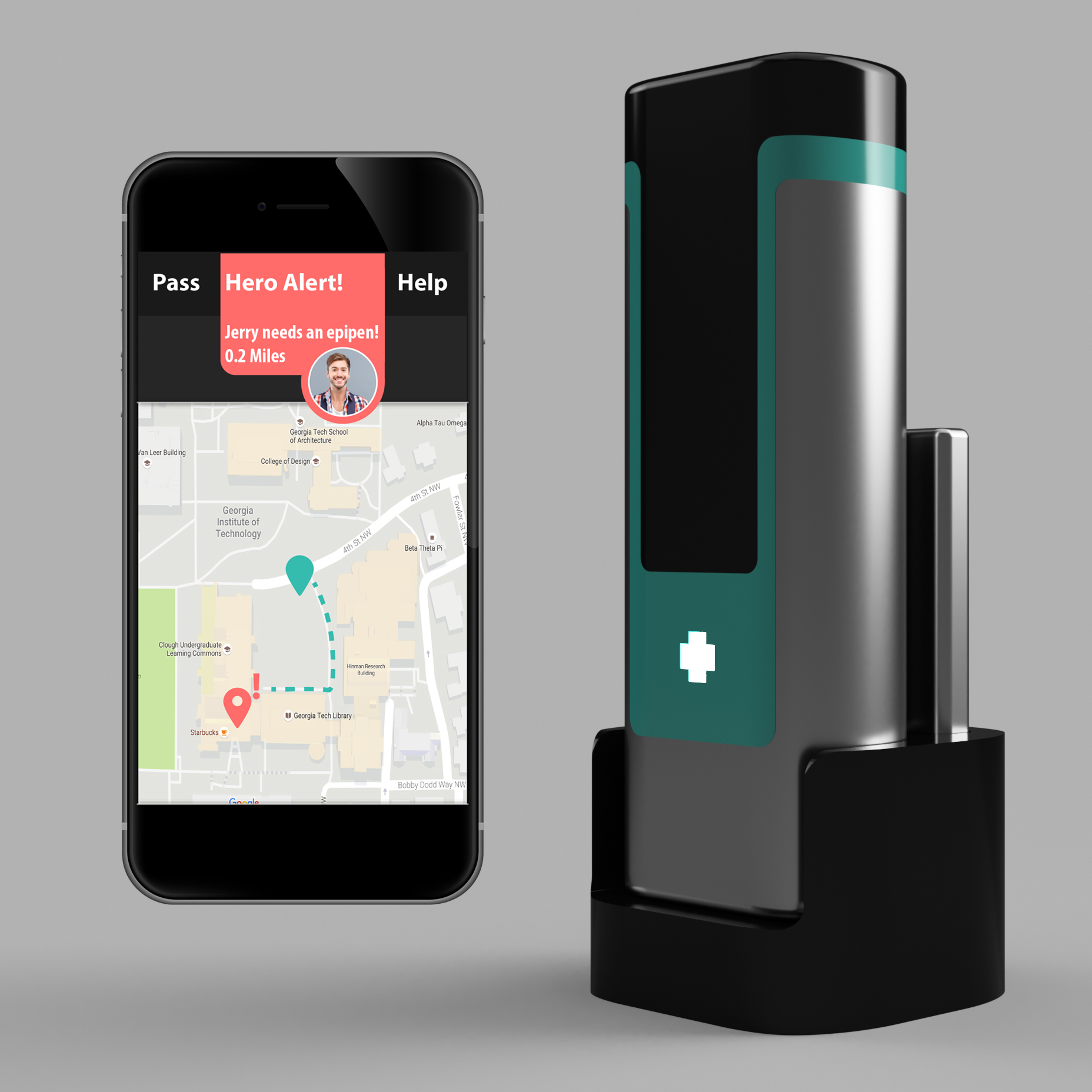
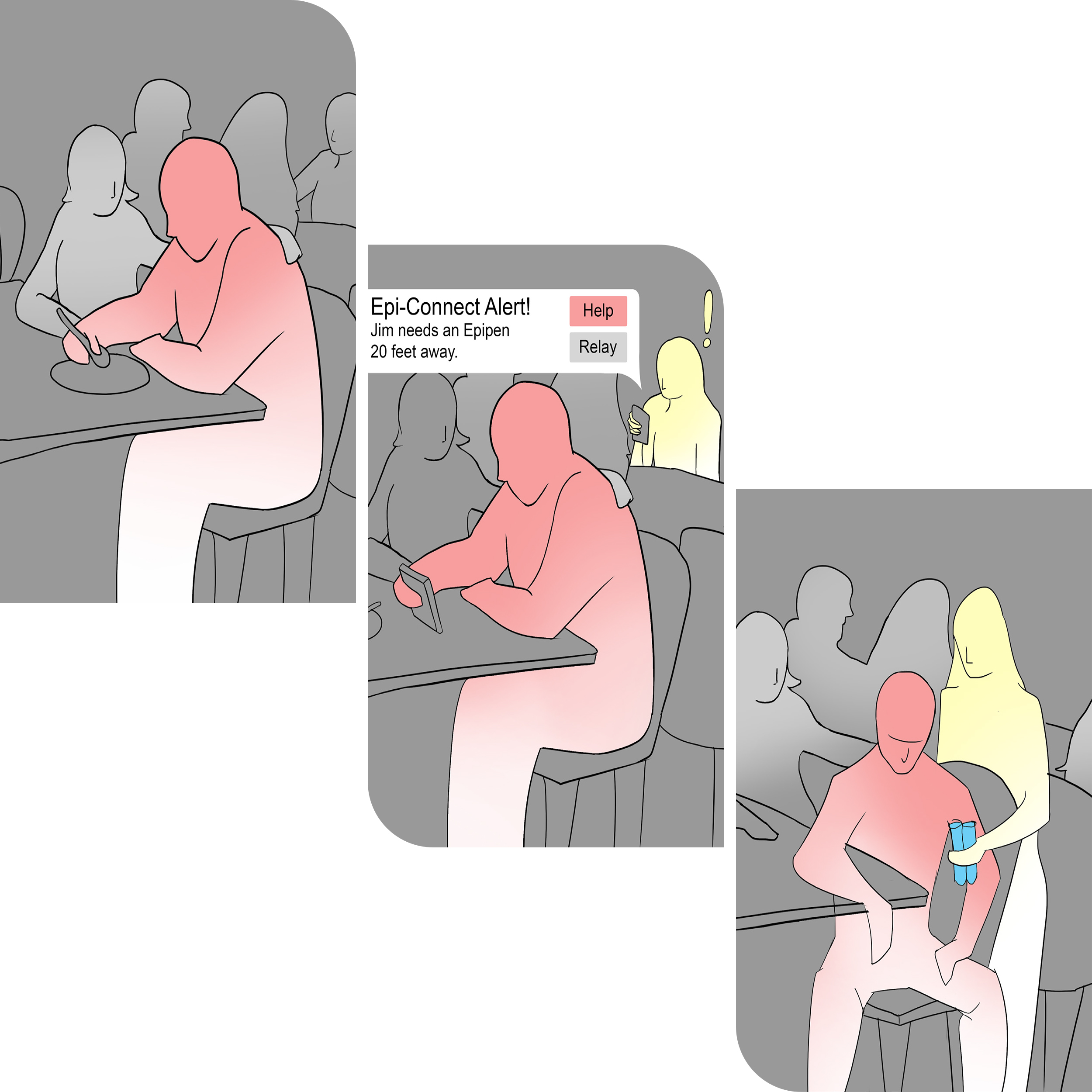
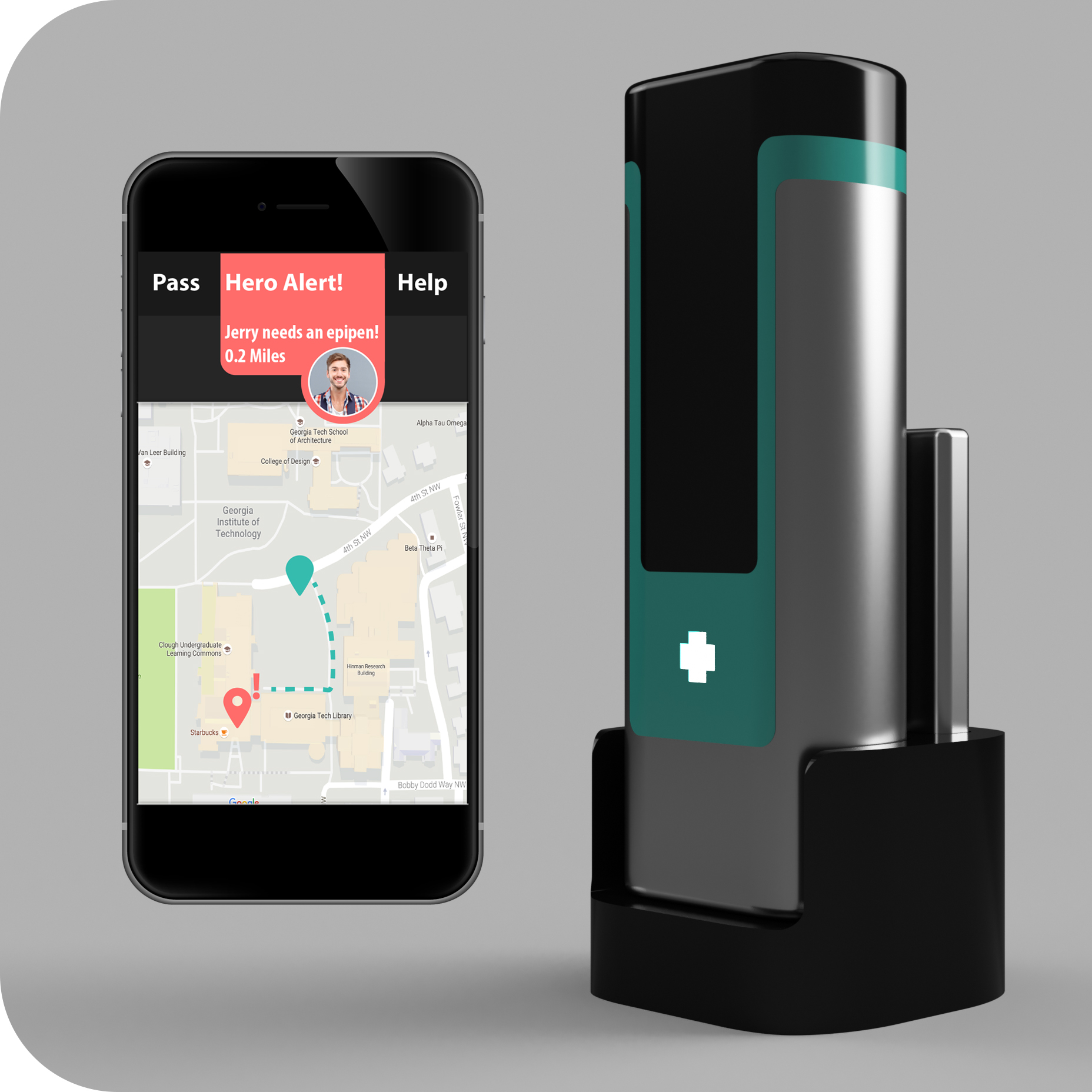
Solution: Hero Alert

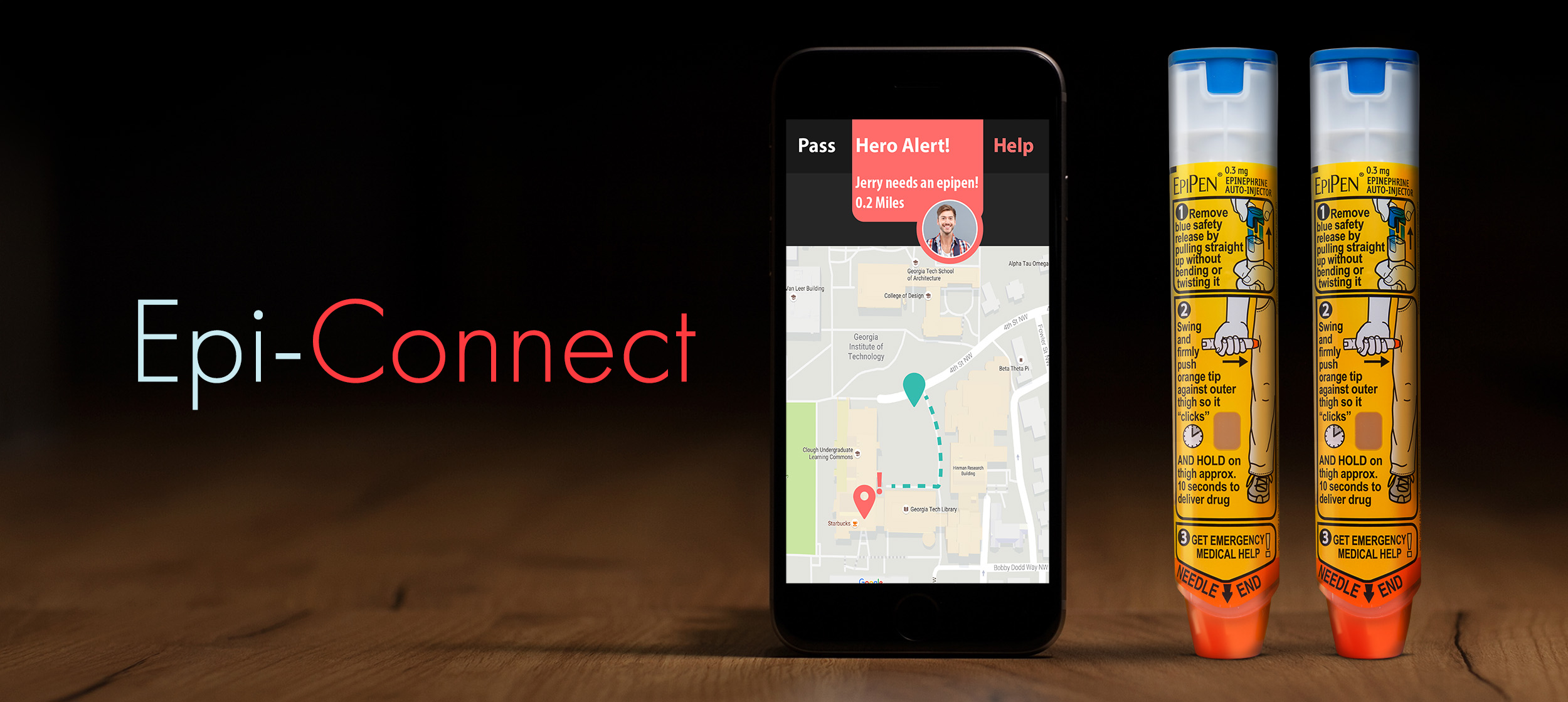
To build a support network, the EpiConnect app features a “Hero Alert” program which lets volunteers give their Epipens to other users during emergencies. 

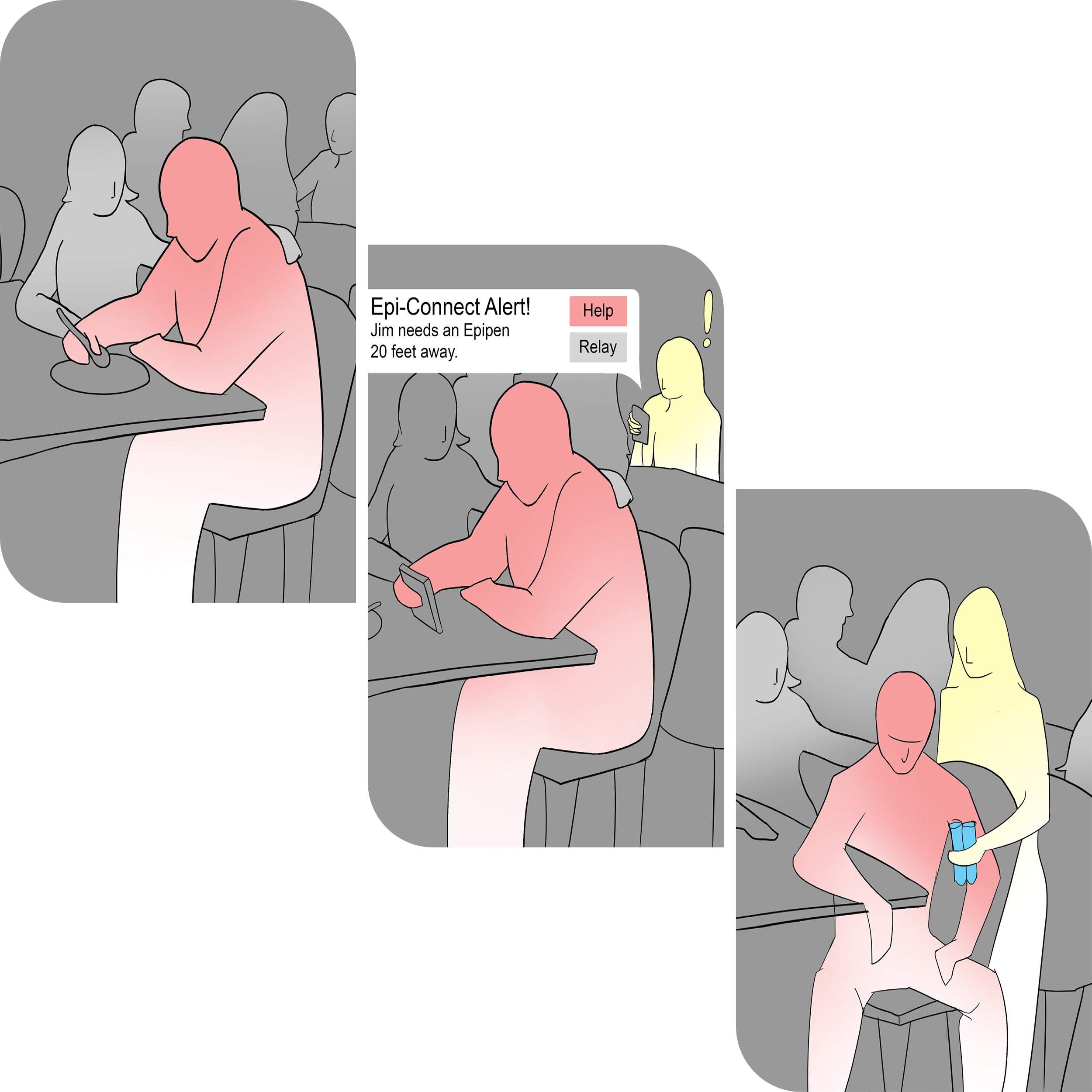
Storyboard: Hero Alert

Users who experience anaphylaxis shock without an Epipen on hand are no longer alone. Life-saving help can be found right around the corner with Hero Alert. 

EpiConnect

Fall 2016 Senior Studio Project 

EpiConnect is a smart case and mobile app system that monitors Epipen expiration and builds a network of support throughout the community of people with severe allergies.

Internal Temperature Regulation

GPS Tracking & Separation Reminders

Exposure Monitoring & Expiration Estimation

Local Emergency Support Network

No-Talk 911 Call with Location Notification
Problem

Expiration

Unpredictable exposure to sun and temperature changes cause Epinephrine to expire earlier than the estimated expiration date.

Problem: Disconnection

The Epipen is only as reliable as it’s user. The community of people with severe allergies has a limited support network. Going into anaphylaxsis shock without an Epipen on hand, even in public, can feel very lonely and hopeless.
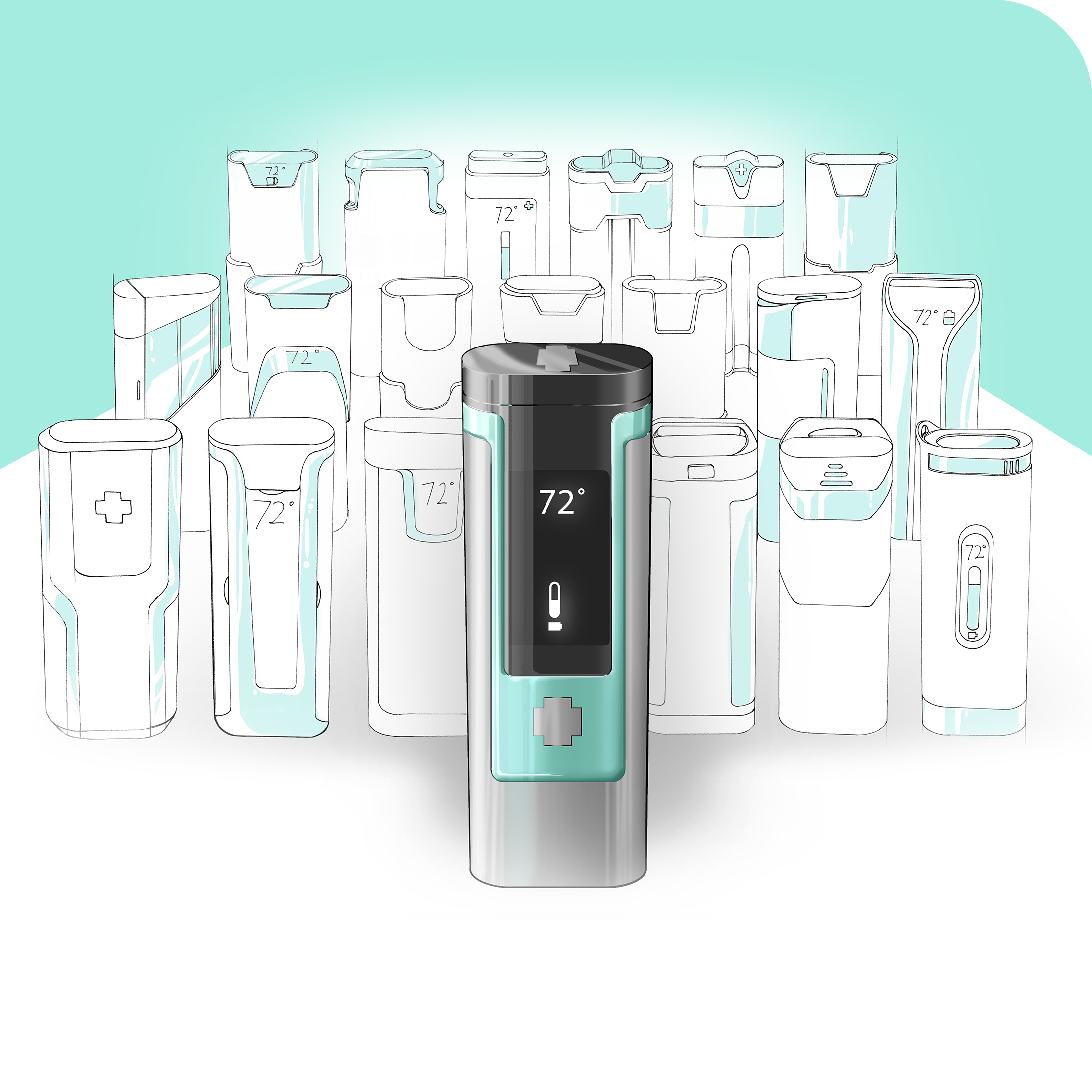
Process: Form Sketches

The $400 Epipen comes in a $2 plastic case that provides no environmental protection. The design process began with brainstorming potential functionality and aesthetics that matched the expense and importance of the Epipen.
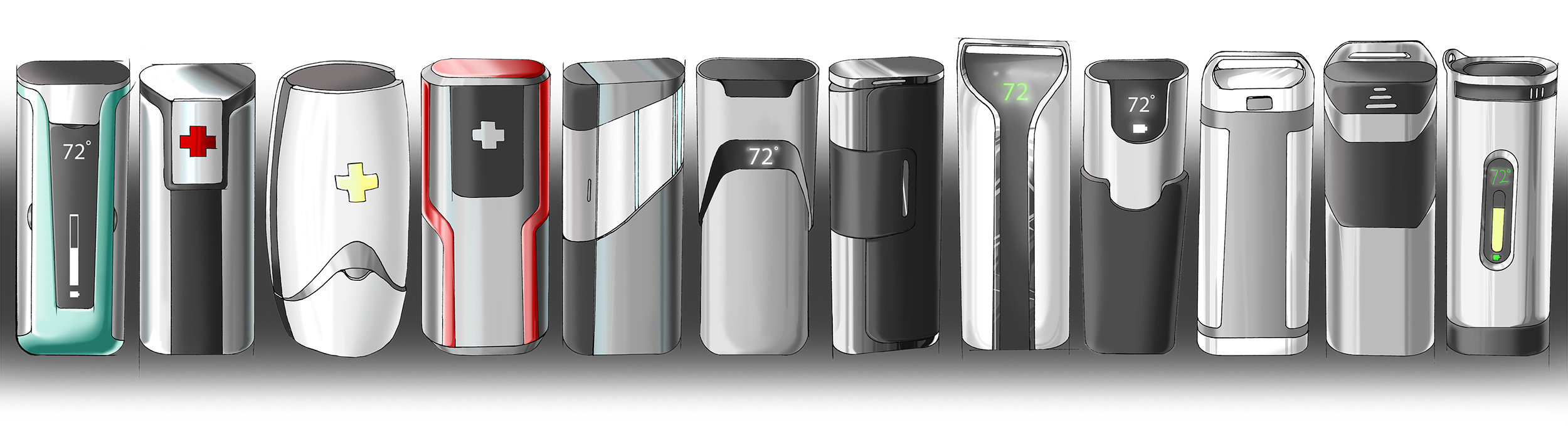
Process: Paper Mockups

The favored sketches were turned into paper models to test the design in three dimensions. Chipboard mockups were made to test Epipen fit and ergonomic feel.
Solution: How It Works

Two Peltier Coolers are used to cool or heat the inside of the Epipen case, while the double wall insulation helps to preserve the internal temperature of the case.

Solution: Home Charging Station

When the user is at home, the Epipen case is stored on a charging stand. The Epipens remain in the case to allow for continuous thermal regulation and monitoring. The charging station charges the case and two backup batteries.

Solution: Digital Screen

Quick case status updates and emergency instructions can be accessed on the case’s external screen.
Solution: EpiConnect App

This app and smart-case system help track and monitor Epipens to ensure that they are always with the user, kept in optimal conditions, and are replaced when the expiration date is reached.
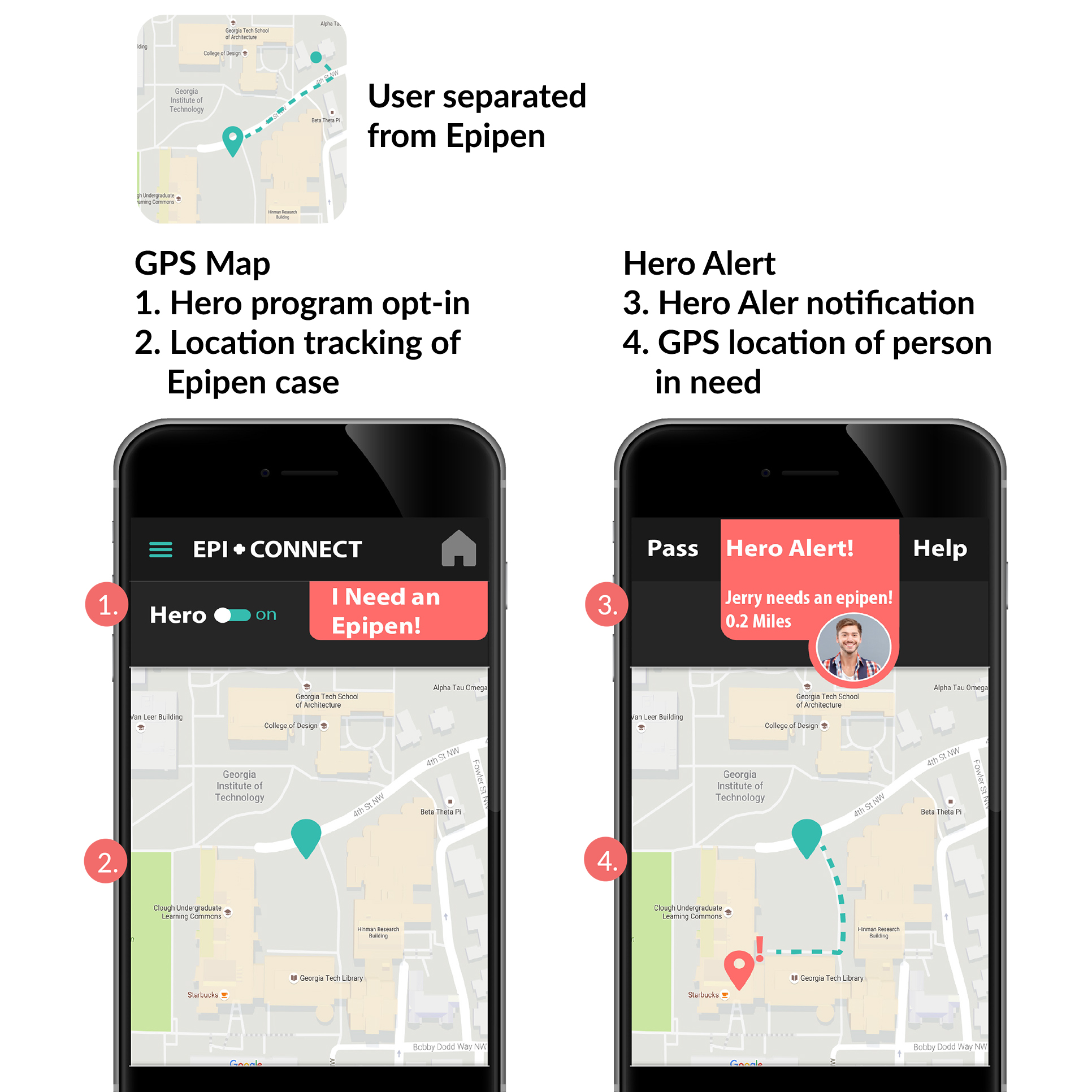
Solution: Hero Alert

To build a support network, the EpiConnect app features a “Hero Alert” program which lets volunteers give their Epipens to other app users during emergencies.

Storyboard: Hero Alert

Users who experience anaphylaxis shock without an Epipen on hand are no longer alone. Life-saving help can be found right around the corner with Hero Alert. 
Pill Cap

Pill Cap

Project Brief:
Redesign a pill organizer for retired veterans.

Brainstorm

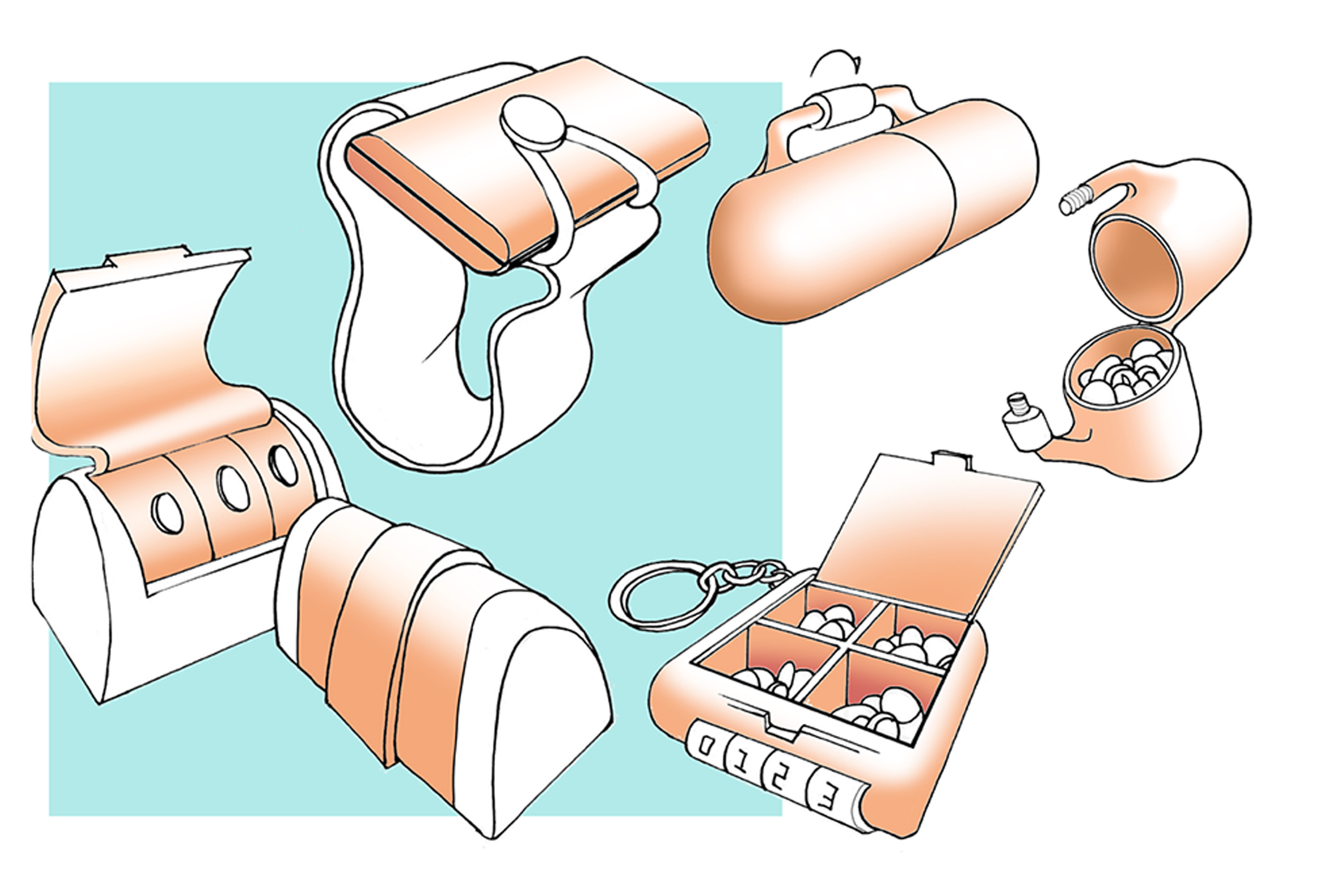
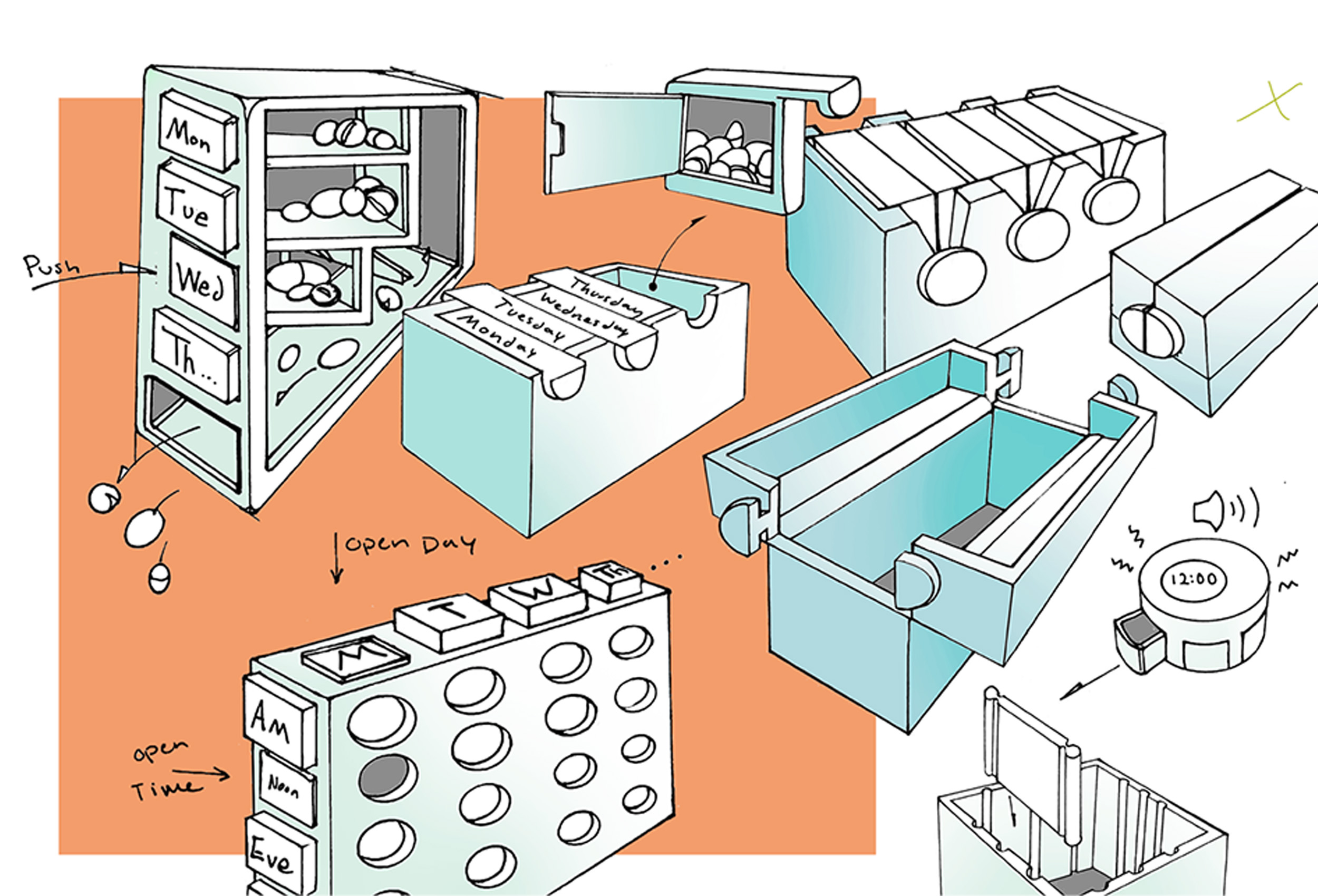
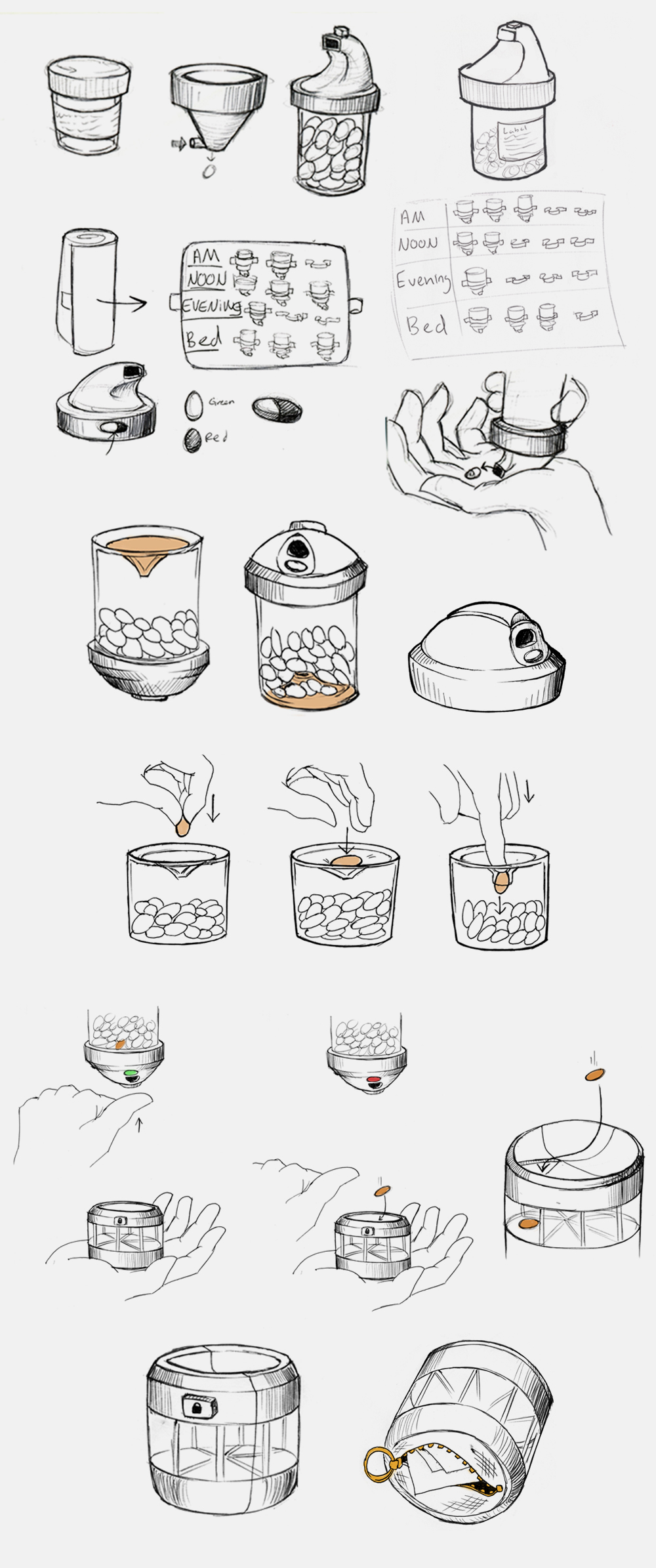
While researching the current market (in 2015), most of the pill organizers seemed to be bulky, less aesthetically pleasing and made with transparent plastic, making them difficult to travel with, distinquishable and revealing. During my first brainstorm, I explored pill organizer designs centered around travel and privacy. 

The target users in this design brief were older-adult retired veterans. These brainstorm concepts focused on ergonomics for those with hand dexterity challenges. Many of the resulting sketches feature large buttons and tabs for accessing the pills and different methods of opening containers.

Interviews

Interviews were conducted with multiple retired veterans. The most important findings that influenced my design decisions were the following:

• The Veterans who used organizer boxes preferred monthly boxes compared to weekly or daily organizers. Monthly pill organizers reduced the frequency at which the veterans would have to sit down and organize their pills into organizer compartments.

• The Veterans who used organizer boxes also often asked a younger family member or pharmacist to fill their organizer boxes for them.

• Some Veterans poured all of their pills into a single large zip lock bag to avoid using pill bottles and organizer boxes altogether.

Problem: Hand Dexterity

The aging process often leads to vision loss, hearing loss, loss of strength, and osteoarthritis. ~49.7% of adults 65+ reported doctor-disgnosed arthritis from 2010-2012. It is more comfortable for those with arthritis to use their palms instead of pinch or power grips.

Redesign a pill organizer for retired veterans.

"

Redesign a pill bottle for older adults.

Redefined Brief

Based on the interviews with older adult veterans, the challenge these users faced while using their pill organizers started with the pill bottle and the process of retrieving and handling those pills to fill the organizer compartments. The power grips required to open the pill bottle, as well as the pinch grips required to pick up the small pills proved difficult for older adults with lower hand dexterity.

Based on this research I chose to redefine and narrow my project brief: Redesign the pill bottle to be more ergonomic and easy to use for older adults with lower hand dexterity. 

Final Concept

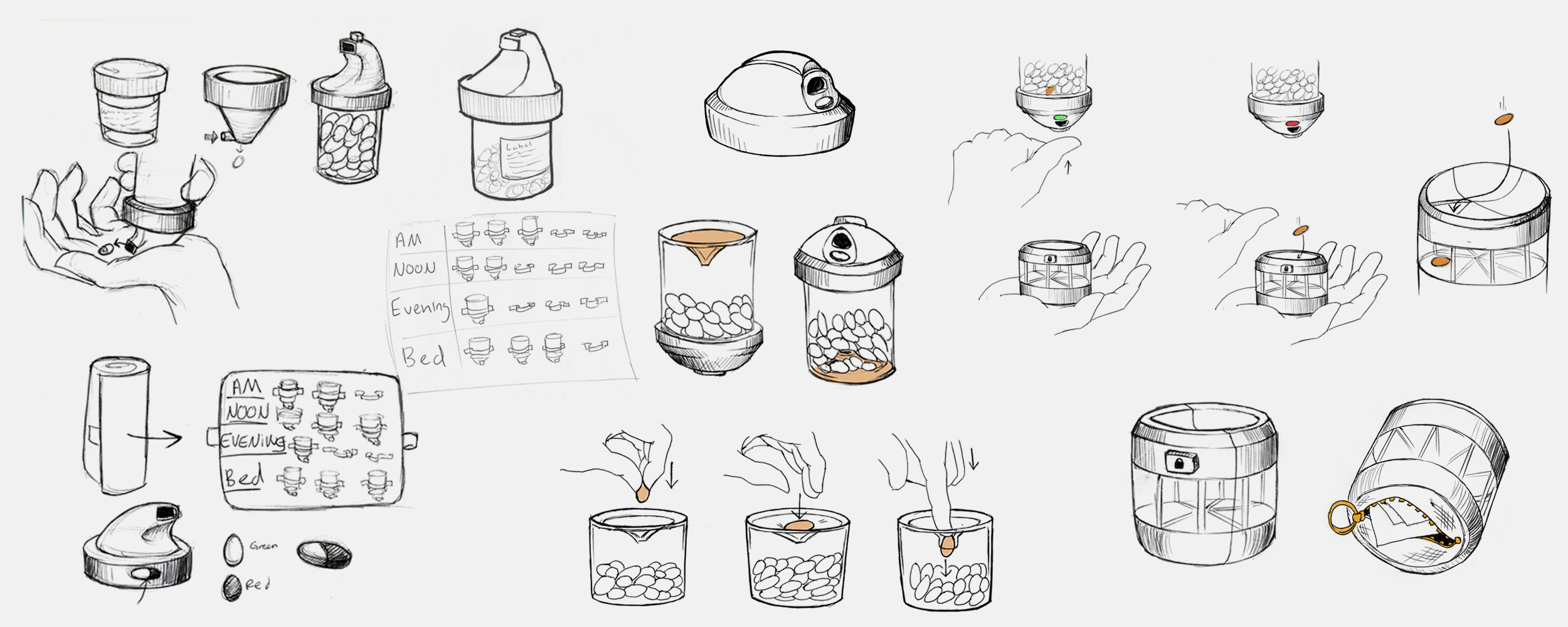
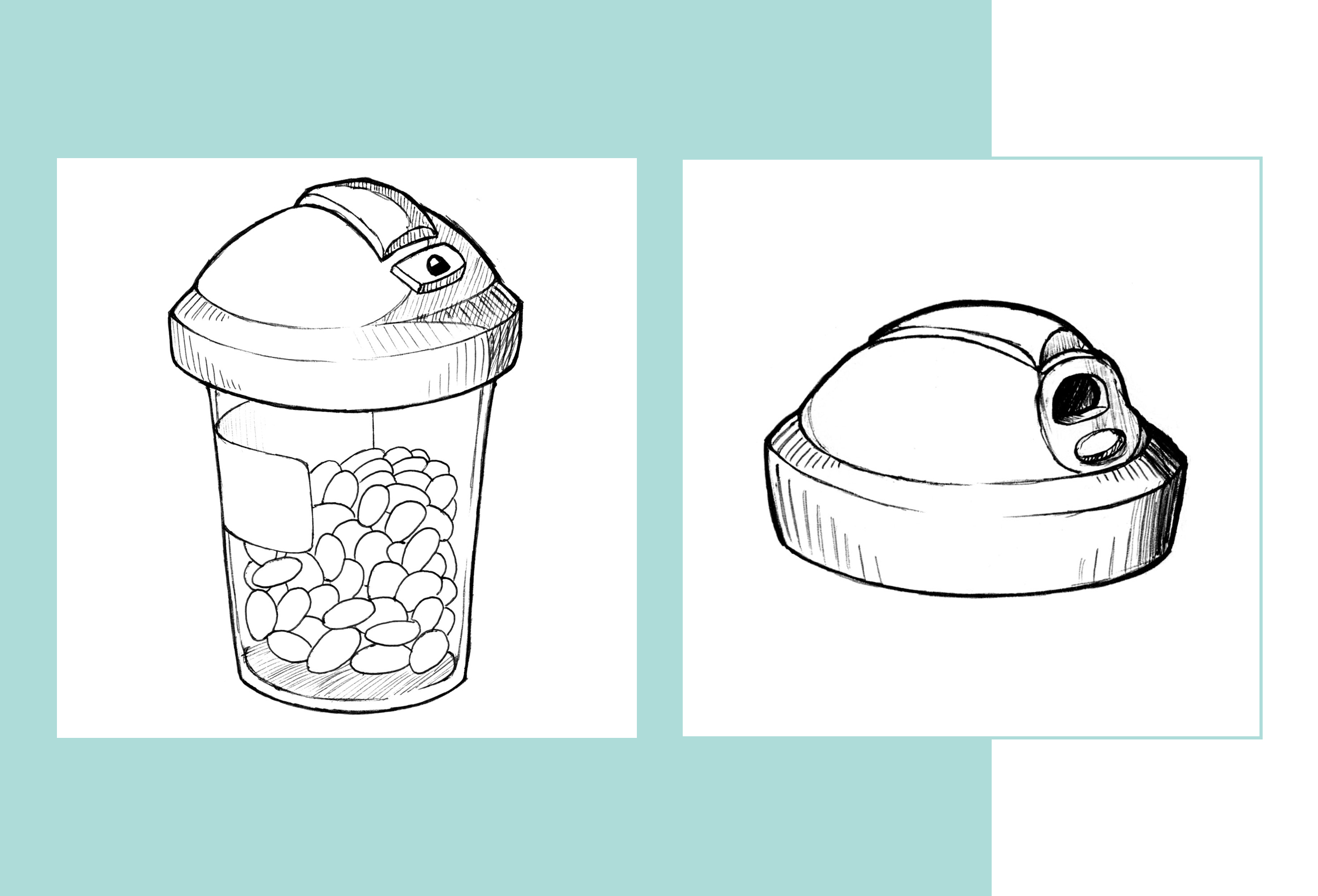
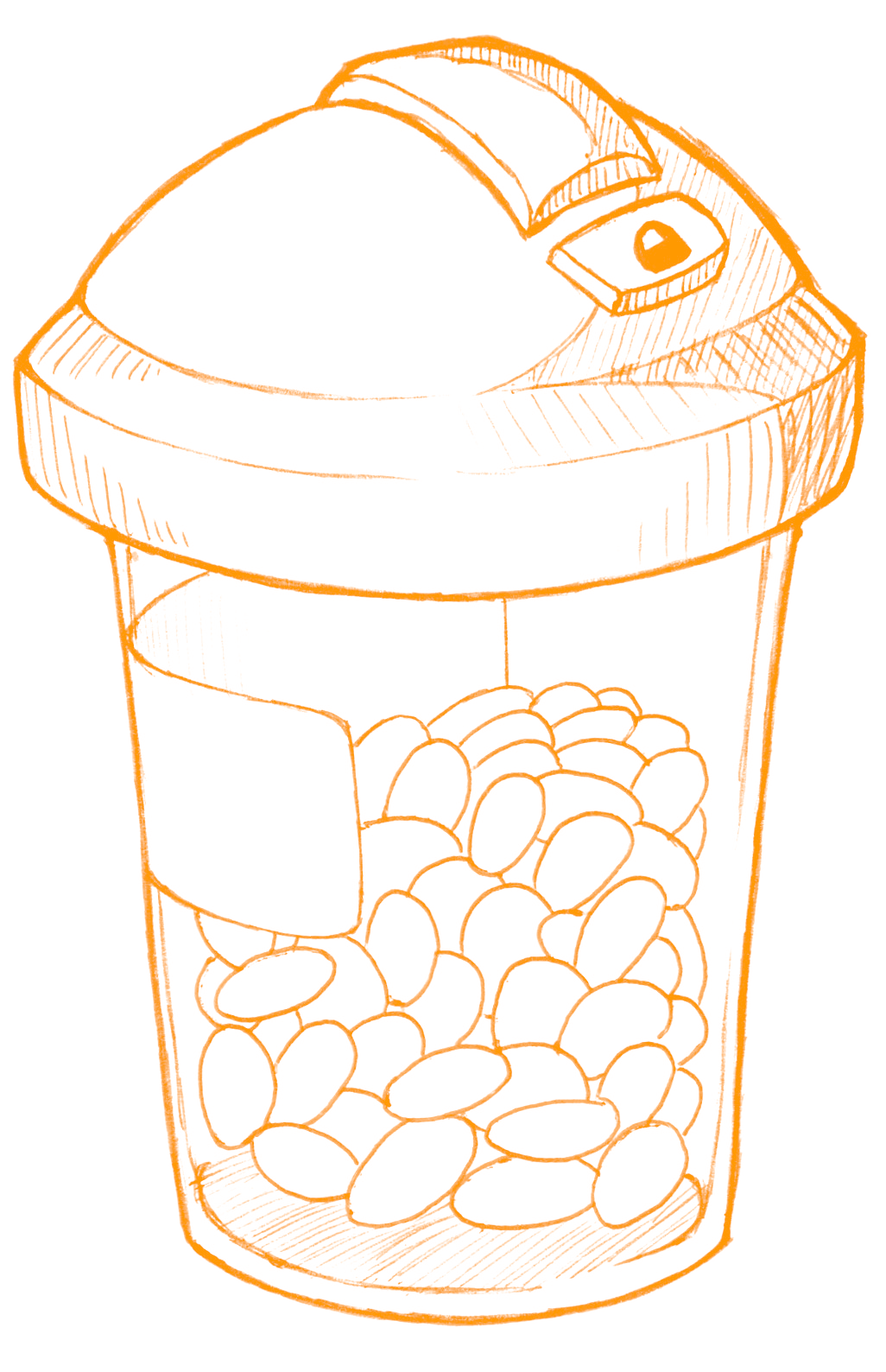
After another series of brainstorms, I decided upon this final concept. It is a redesigned pill bottle cap that eliminates the need for the cap to be unscrewed and opened in order to retrieve a pill.


Concept Storyboard

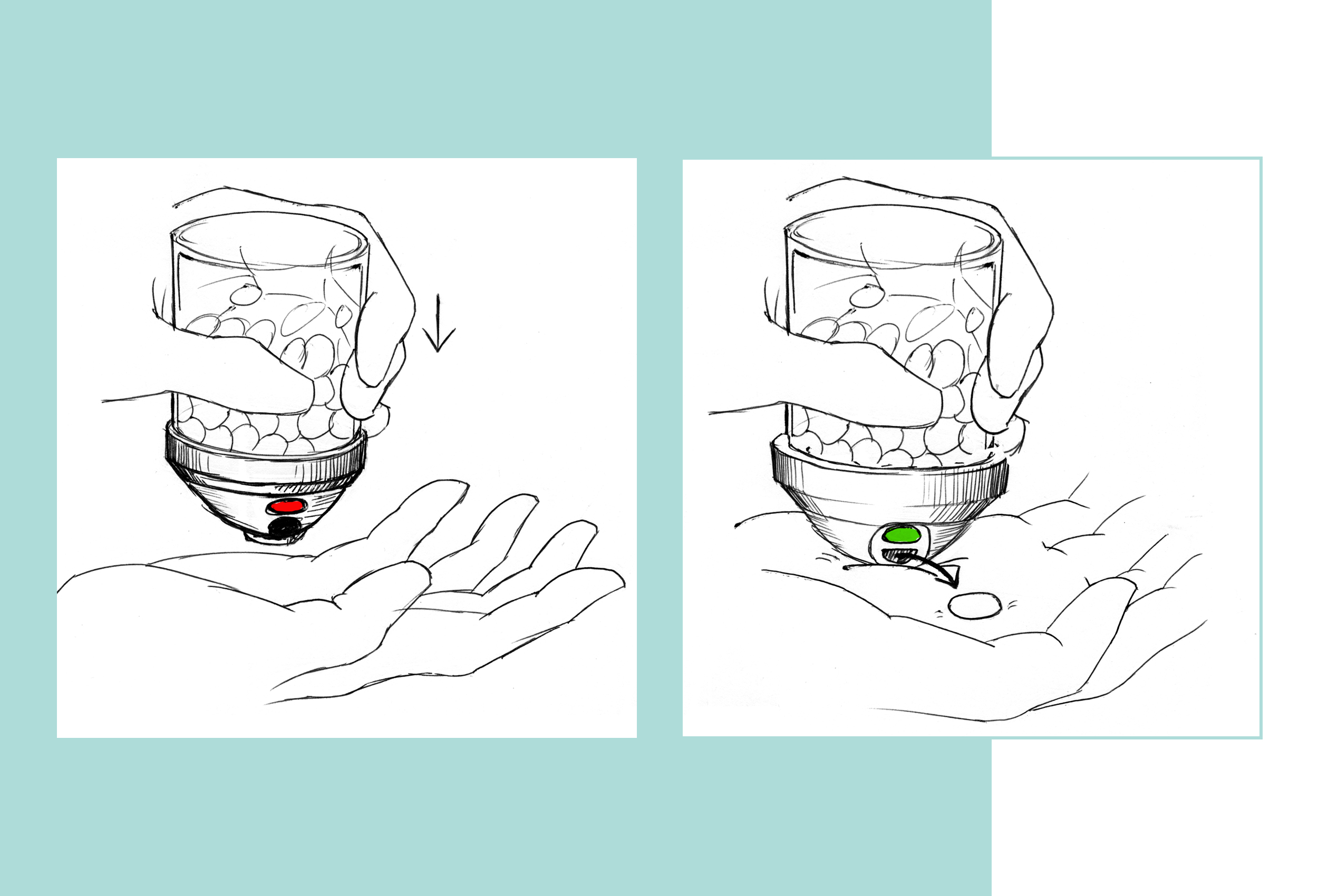
This storyboard illustrates the intended use of the pill bottle cap: The user flips the bottle upside down to press the top against their upturned palm. This action triggers a button/mechanism that dispenses a pill into the hand. No power or pinch grips required.


Rapid Prototyping

Low fidelity models allowed me to test out the new pill bottle cap designs. The prototype confirmed the actions required to dispense a pill and whether or not the action required power or pinch grips.


Pill Cap Design #1

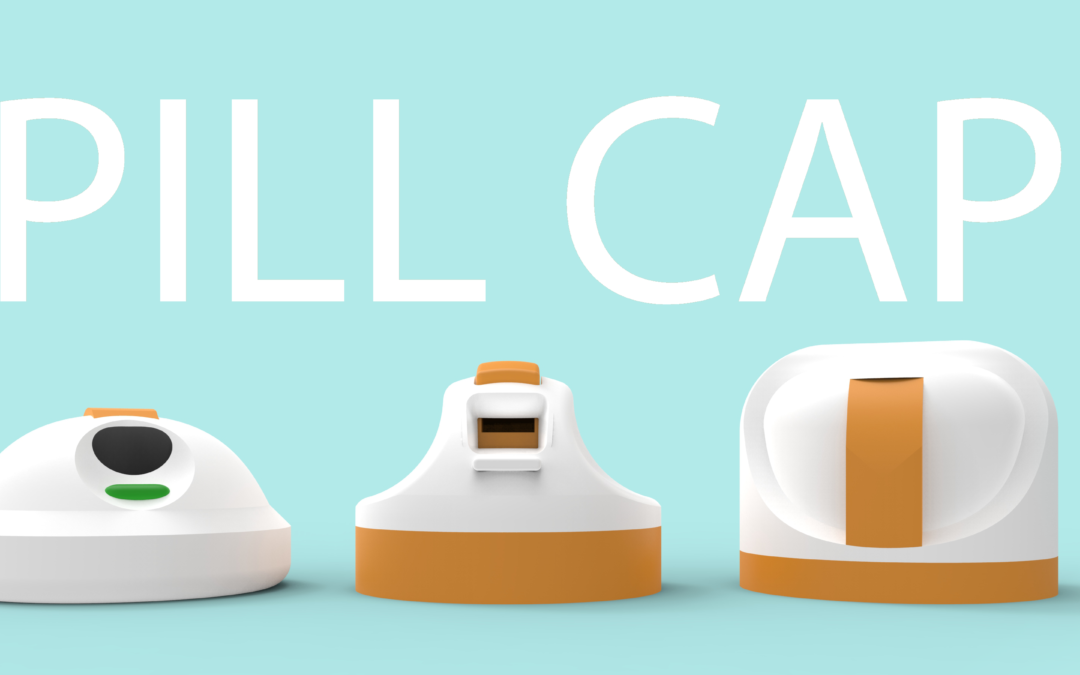
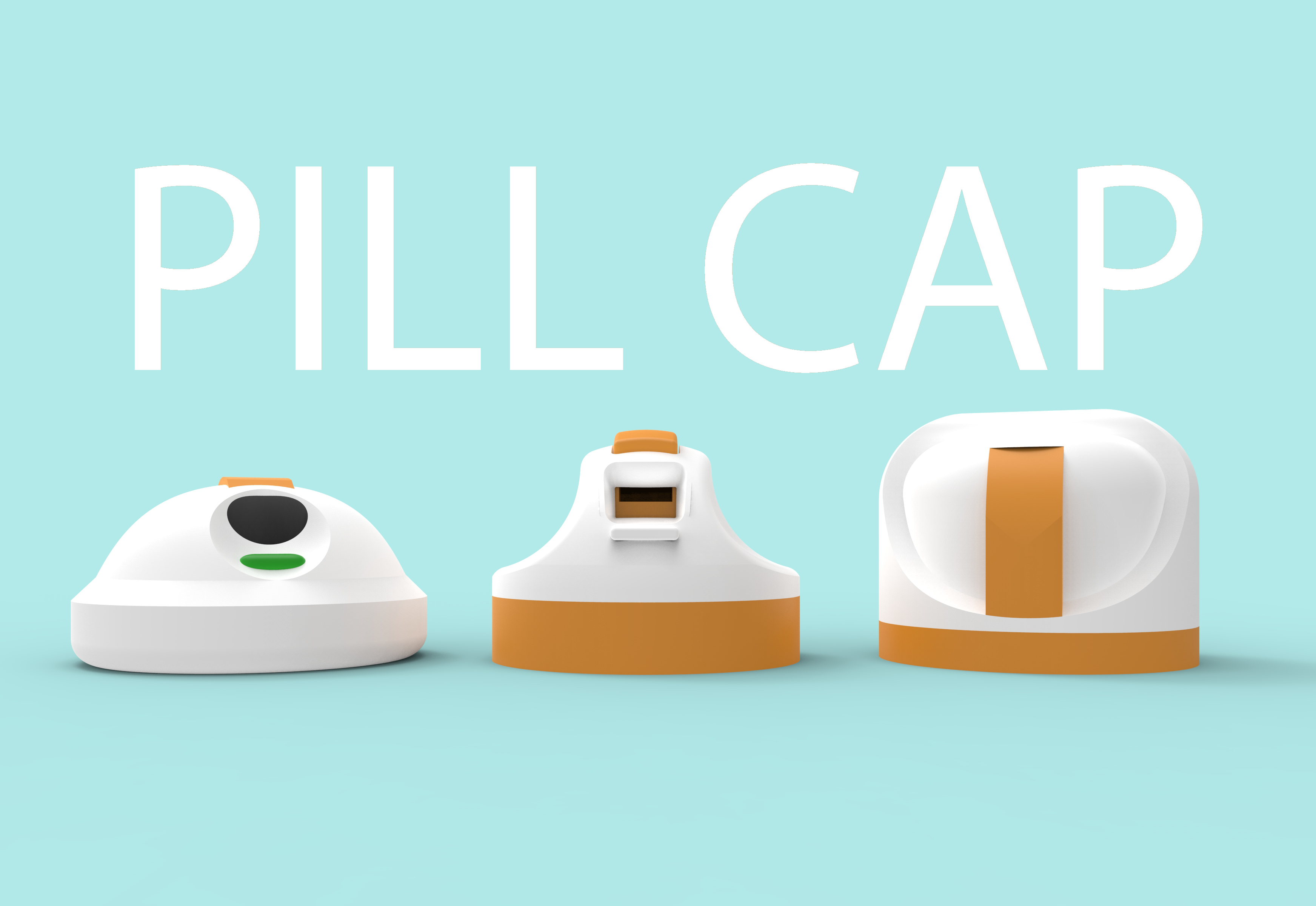
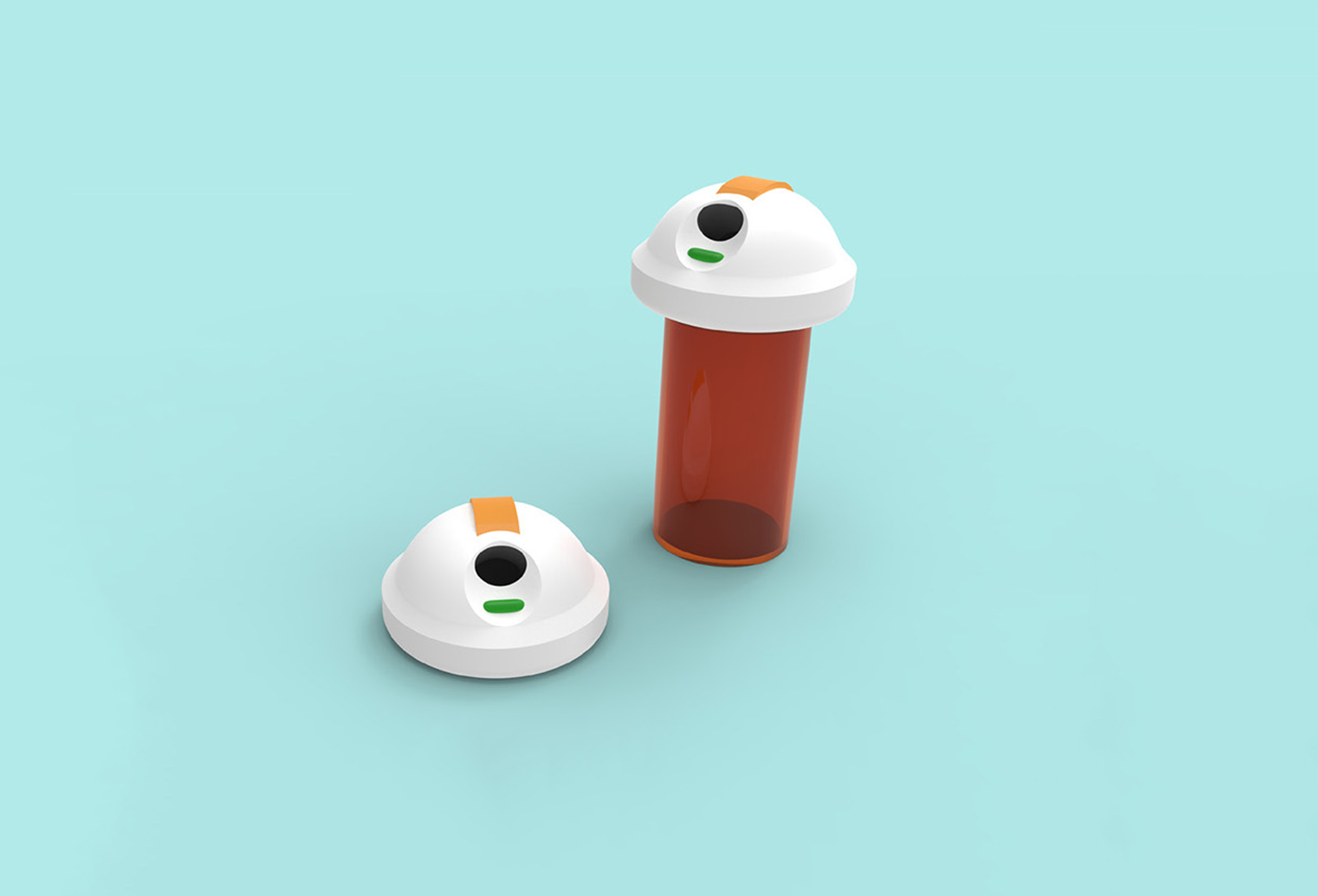
The pill cap model was designed to fit onto standard pill bottles. Once the user purchases a new prescription, they can replace the standard pill bottle top with this new Pill Cap.

The green dial is a basic tracker/timer that would turn from green to red once the pill was taken that day. The timer would reset back to showing green for the next day.

Pill Cap Design #2

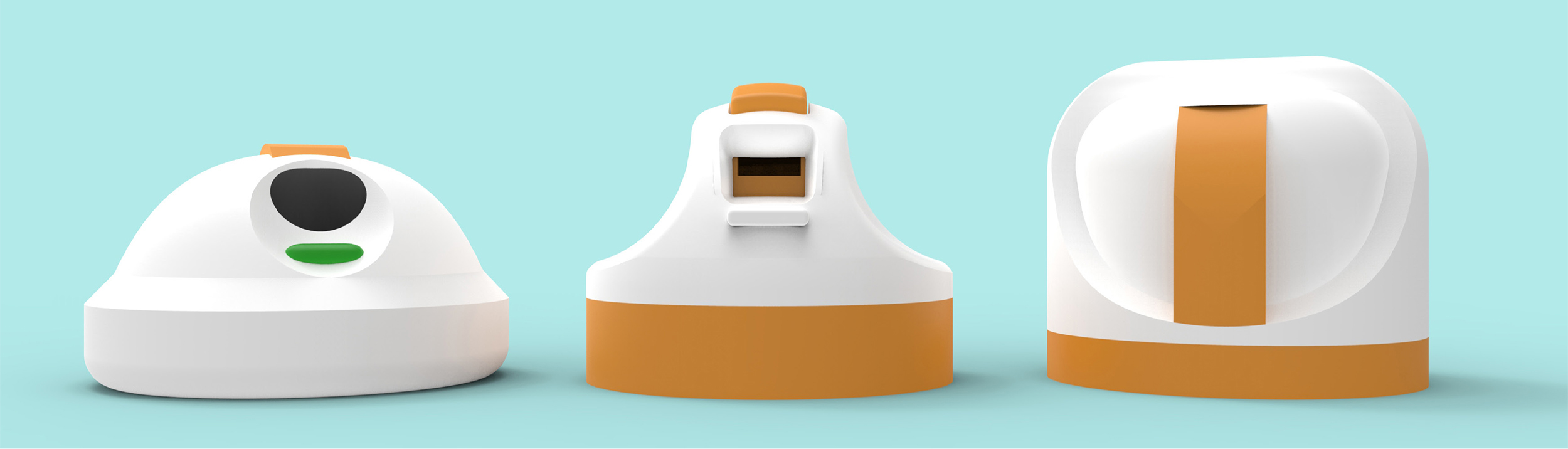
The second iteration of the Pill Cap model featured a working dispensing mechanism. I created a functioning 3D printed prototype to test the ergonomics of using the product to dispense the pill into the palm of the hand.

The dial concept was archived due to the variability of pill-consumption frequencies. The timer would need to connect to an app to allow for customization. I noted plans to consider app integration in the future.


Pill Cap Design #3

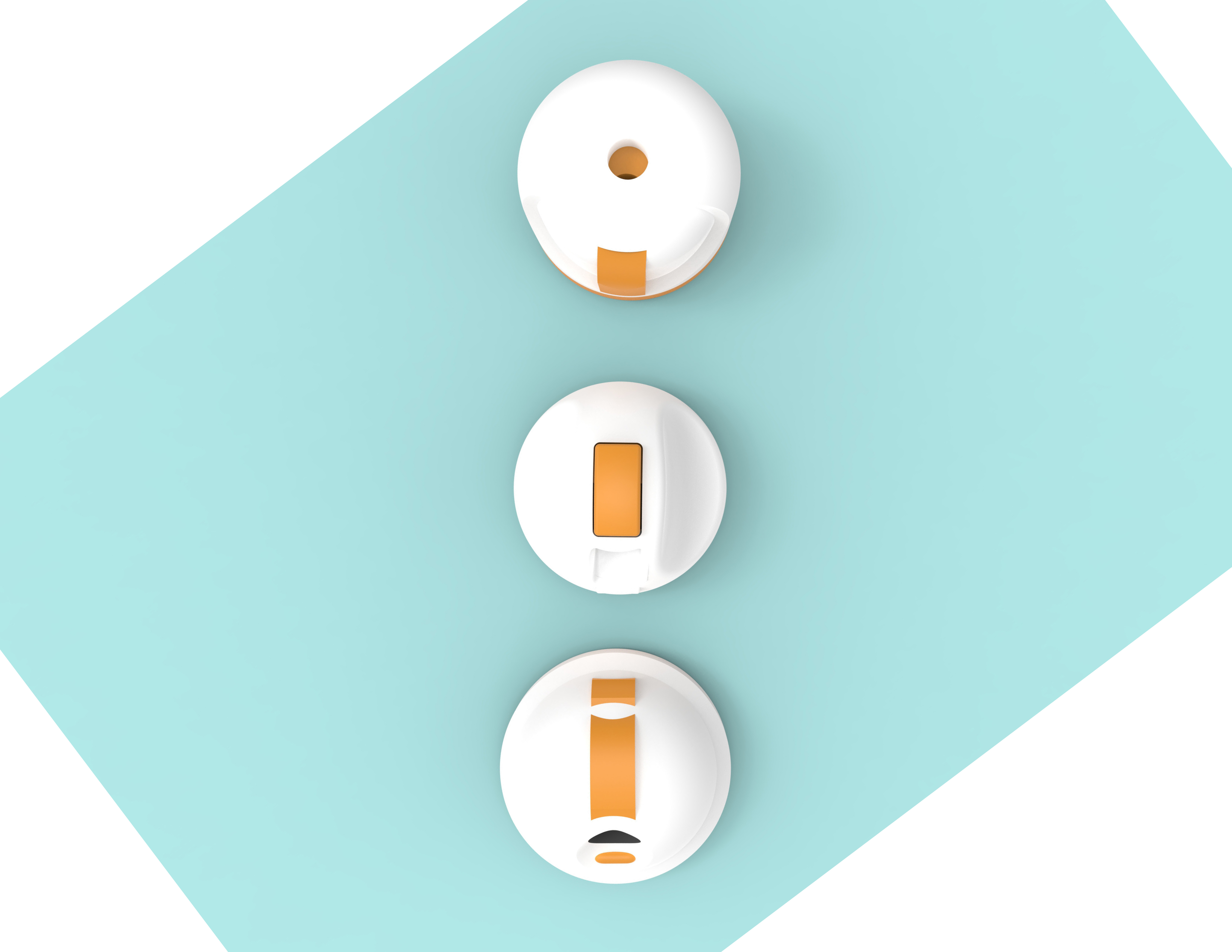
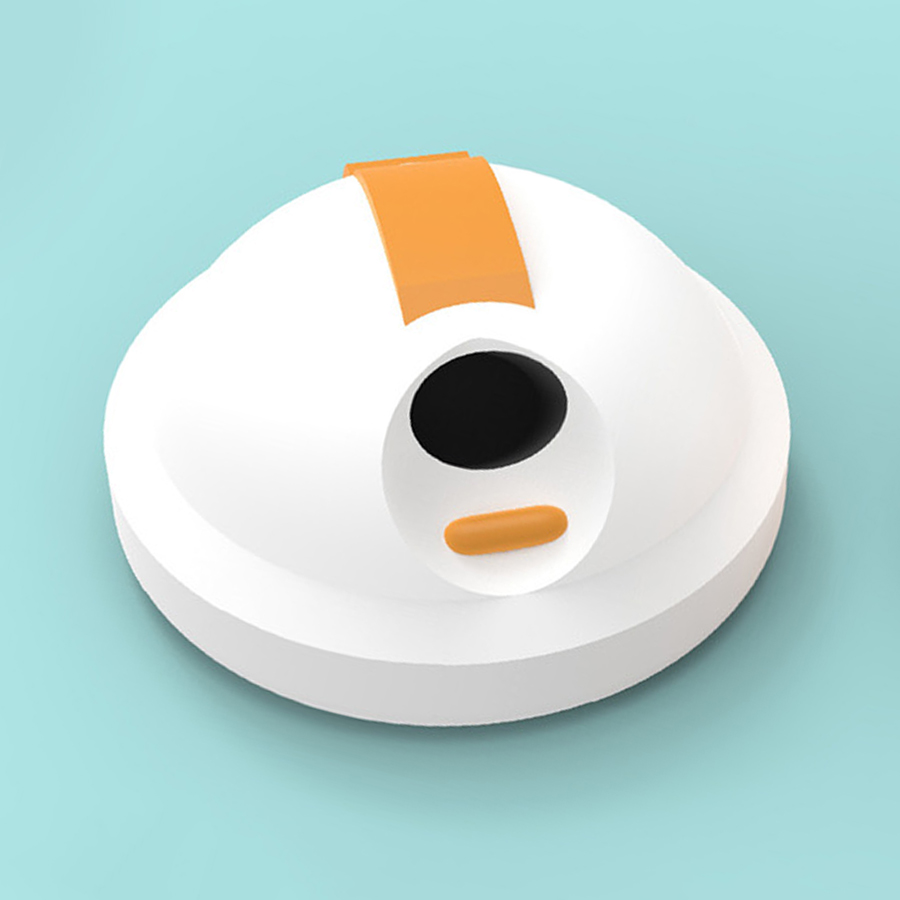
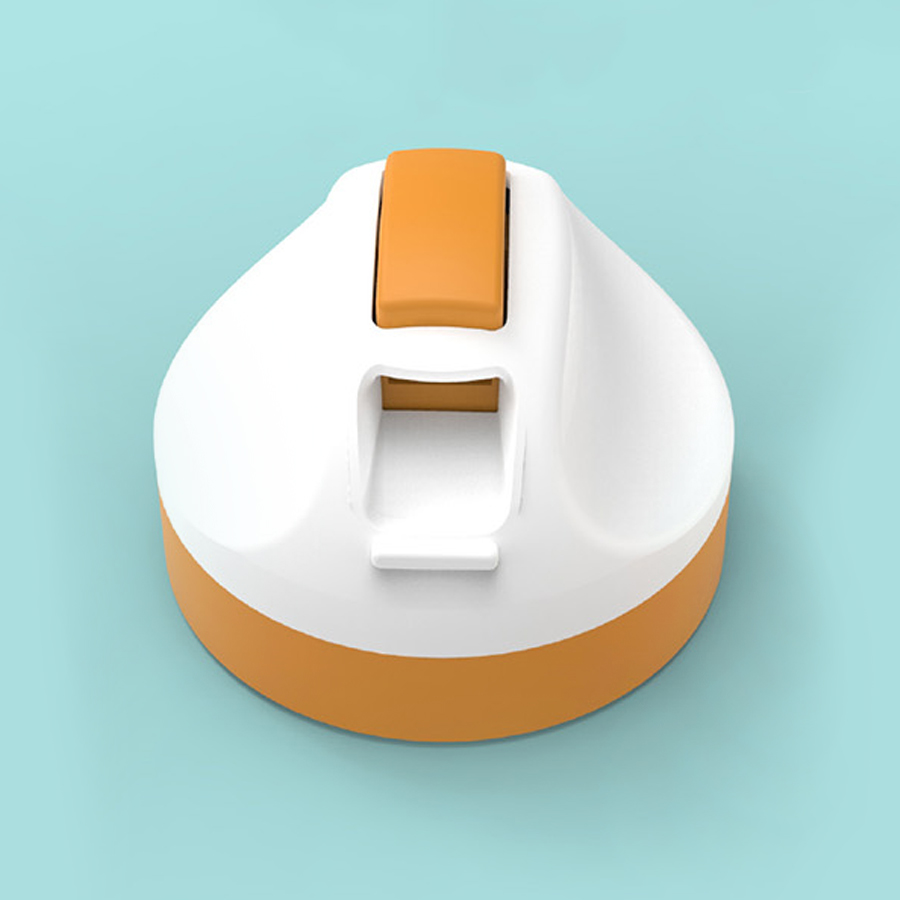
Version three improved upon the dispensing mechanism based on the test results from the prototype of version two. This new design maximized the use of gravity so that the pill would more reliably fall into the palm of the hand.

This model was 3D printed and tested as a working prototype to determine if the dispensing mechanism was more reliable and if the relocation of the button would continue to be ergonomic and easy to use during the process of dispensing a pill.


Pill Cap Dispenser | Project Summary

Fall 2015 Junior Healthcare Studio Project

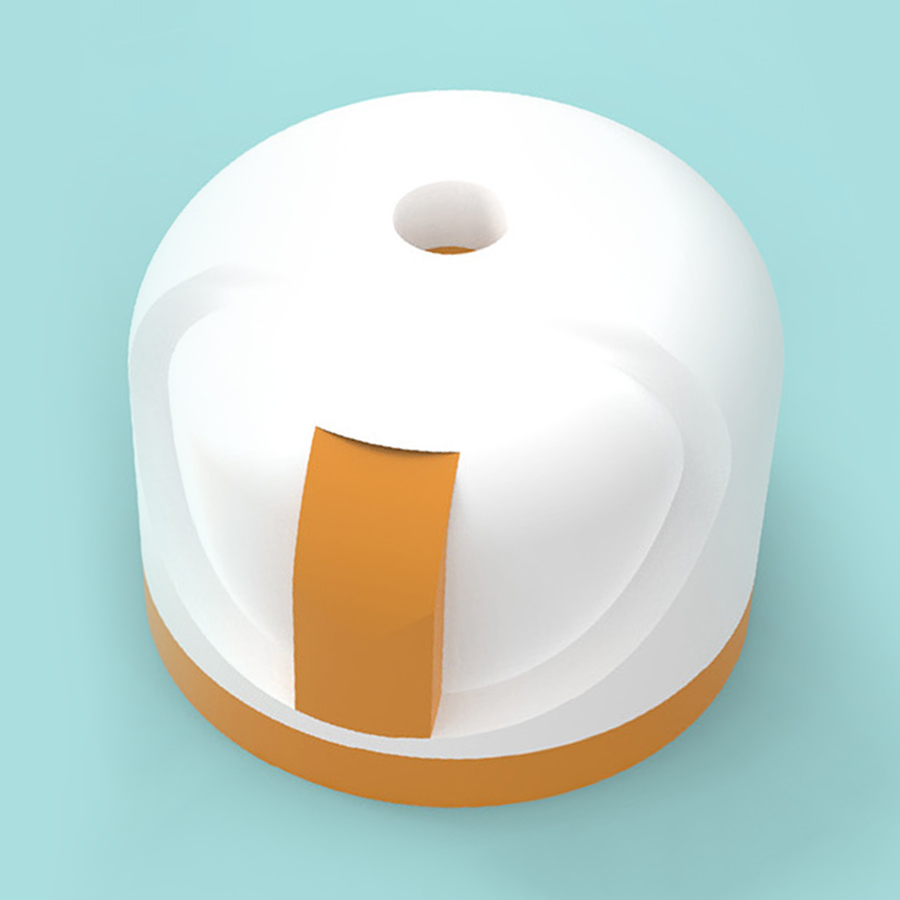
Pill cap dispenser – It’s a pill bottle top replacement that allows users to dispense a pill into the palm of the hand.

September 2015

Junior Healthcare Design Studio

Initial studio brief: Re-design a pill organizer for retired veterans in the Veterans Association.

Evolved brief based on veteran interviews: Target pill bottle ergonomics for elderly with decreasing hand strength and dexterity.

December 2015

Personal Project

After project completion, the VA voted this project as most promising and showed interest in pursuing it further.

I continued developing the form and function during my free time. Focusing mostly on the pill-dispensing mechanism and ergonomics.

March 2016

Personal Research Project with Mentor Professor Cowan

After a 3rd round of testing, the form was altered for improved ergonomics and internal mechanism structure. I also began researching patents and patent law.

Moving Forward

To further develop this project, my next steps are the following: 

1. Collaborate with engineers to improve the dispensing mechanism and explore solutions that can accommodate a wide range of pill shapes and sizes.

2. Explore the challenge of child safety.

3. Explore the challenge of weather-proofing and maintaining optimal medication storage conditions.

4. Conduct a study with target audience to determine the viability of an app interface.

5. Integrate the Pill Cap into a larger connected system of reminders and notifications to address medication compliance. 

Project Brief:
Redesign a pill organizer for retired veterans.

Brainstorm

While researching the current market (in 2015), most of the pill organizers seemed to be bulky, less aesthetically pleasing and made with transparent plastic, making them difficult to travel with, distinquishable and revealing. During my first brainstorm, I explored pill organizer designs centered around travel and privacy.

The target users in this design brief were older-adult retired veterans. These brainstorm concepts focused on ergonomics for those with hand dexterity challenges. Many of the resulting sketches feature large buttons and tabs for accessing the pills and different methods of opening containers.

Interviews

Interviews were conducted with multiple retired veterans. The most important findings that influenced my design decisions were the following:

• The Veterans who used organizer boxes preferred monthly boxes compared to weekly or daily organizers. Monthly pill organizers reduced the frequency at which the veterans would have to sit down and organize their pills into organizer compartments.

• The Veterans who used organizer boxes also often asked a younger family member or pharmacist to fill their organizer boxes for them.

• Some Veterans poured all of their pills into a single large zip lock bag to avoid using pill bottles and organizer boxes altogether.

Problem: Hand Dexterity

The aging process often leads to vision loss, hearing loss, loss of strength, and osteoarthritis. ~49.7% of adults 65+ reported doctor-disgnosed arthritis from 2010-2012. It is more comfortable for those with arthritis to use their palms instead of pinch or power grips.

Redesign a pill organizer for retired veterans.

"

Redesign a pill bottle for older adults.

Redefined Brief

Based on the interviews with older adult veterans, the challenge these users faced while using their pill organizers started with the pill bottle and the process of retrieving and handling those pills to fill the organizer compartments. The power grips required to open the pill bottle, as well as the pinch grips required to pick up the small pills proved difficult for older adults with lower hand dexterity.

Based on this research I chose to redefine and narrow my project brief: Redesign the pill bottle to be more ergonomic and easy to use for older adults with lower hand dexterity. 

Final Concept

After another series of brainstorms, I decided upon this final concept. It is a redesigned pill bottle cap that eliminates the need for the cap to be unscrewed and opened in order to retrieve a pill.


Concept Storyboard

This storyboard illustrates the intended use of the pill bottle cap: The user flips the bottle upside down to press the top against their upturned palm. This action triggers a button/mechanism that dispenses a pill into the hand. No power or pinch grips required.


Rapid Prototyping

Low fidelity models allowed me to test out the new pill bottle cap designs. The prototype confirmed the actions required to dispense a pill and whether or not the action required power or pinch grips.


Pill Cap Design #1

The pill cap model was designed to fit onto standard pill bottles. Once the user purchases a new prescription, they can replace the standard pill bottle top with this new Pill Cap.

The green dial is a basic tracker/timer that would turn from green to red once the pill was taken that day. The timer would reset back to showing green for the next day.

Pill Cap Design #2

The second iteration of the Pill Cap model featured a working dispensing mechanism. I created a functioning 3D printed prototype to test the ergonomics of using the product to dispense the pill into the palm of the hand.

The dial concept was archived due to the variability of pill-consumption frequencies. The timer would need to connect to an app to allow for customization. I noted plans to consider app integration in the future.


Pill Cap Design #3

Version three improved upon the dispensing mechanism based on the test results from the prototype of version two. This new design maximized the use of gravity so that the pill would more reliably fall into the palm of the hand.

This model was 3D printed and tested as a working prototype to determine if the dispensing mechanism was more reliable and if the relocation of the button would continue to be ergonomic and easy to use during the process of dispensing a pill.


Pill Cap Dispenser | Project Summary

Fall 2015 Junior Healthcare Studio Project

Pill cap dispenser – It’s a pill bottle top replacement that allows users to dispense a pill into the palm of the hand.

September 2015

Junior Healthcare Design Studio

Initial studio brief: Re-design a pill organizer for retired veterans in the Veterans Association.

Evolved brief based on veteran interviews: Target pill bottle ergonomics for elderly with decreasing hand strength and dexterity.

December 2015

Personal Project

After project completion, the VA voted this project as most promising and showed interest in pursuing it further.

I continued developing the form and function during my free time. Focusing mostly on the pill-dispensing mechanism and ergonomics.

March 2016

Personal Research Project with Mentor Professor Cowan

After a 3rd round of testing, the form was altered for improved ergonomics and internal mechanism structure. I also began researching patents and patent law.

Moving Forward

To further develop this project, my next steps are the following:

1. Collaborate with engineers to improve the dispensing mechanism and explore solutions that can accommodate a wide range of pill shapes and sizes.

2. Explore the challenge of child safety.

3. Explore the challenge of weather-proofing and maintaining optimal medication storage conditions.

4. Conduct a study with target audience to determine the viability of an app interface.

5. Integrate the Pill Cap into a larger connected system of reminders and notifications to address medication compliance.